


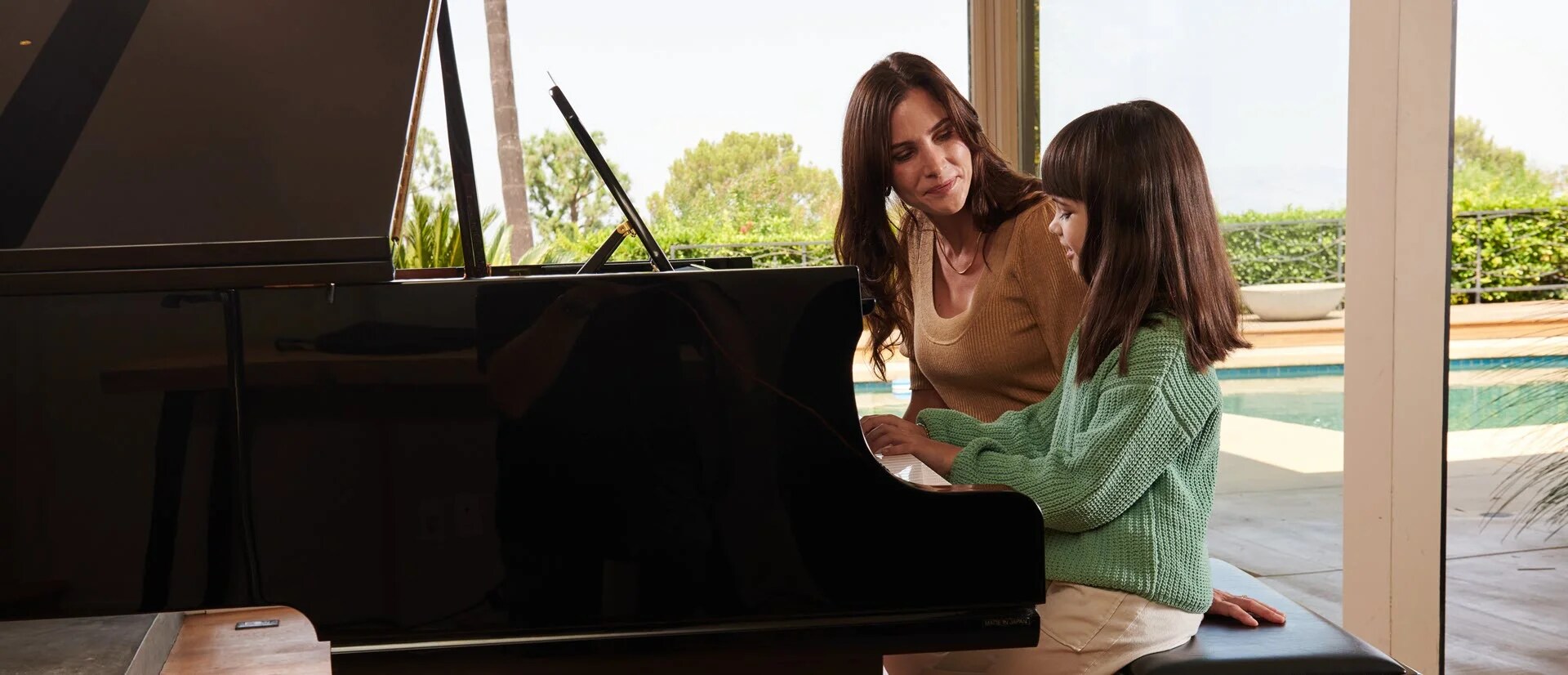
Four tips for getting your child started on piano
As a parent, you want to help your child grow and develop into a well-rounded person. When many parents think about preparing their kids to excel at school, they tend to focus on how to advance their reading, maths and science aptitude, or on getting them involved in sports to help develop strength, coordination and teamwork. Often overlooked are the arts, and specifically playing a musical instrument.
But research shows that playing an instrument has many benefits for your child, from good posture and eye-to-hand coordination to better cognition. Students who take an interest in music also do better at reading, spelling, maths and science — they even develop improved language skills. Music also helps children express their feelings, leading to better and more balanced emotional development. The bottom line is this: playing an instrument benefits a child in many different ways.
Which instrument to start with is largely a matter of personal taste; certainly, if your child shows an affinity for one particular instrument, it's good to encourage that interest because it makes it more likely they will embrace music lessons with enthusiasm. But if there's no particular leaning, piano is a great choice for kids, as it is easy to produce a satisfying sound right away: no having to figure out how to blow properly into a wind instrument, or learning to bow a stringed instrument. (While drums are certainly a fun activity, not every family wants to endure the tumult of a kid bashing on a drum kit every day!) In addition, piano features in many styles of music, so your child will be able to participate in a wide range of musical activities as they grow and develop.
Here are four things parents can do to help support their child in starting to learn piano.
1. Create a Musical Environment
This one's easy: listen to piano music at home and talk about how much you enjoy it. All the major music streaming services have playlists of piano music. You can search for them using terms like "classical piano," "pop piano," "jazzy piano," and so on, or simply enter the name of your favourite pianist. Making piano music part of your everyday life shows your child that it's a cool and positive activity.
Similarly, make it a point to watch films and TV shows that feature the piano. Younger children often delight in this classic Bugs Bunny piano performance , and Chico Marx's wonderfully playful piano technique from the Marx Brothers films is a perennial favourite. And audiences of all ages enjoy this iconic scene from the film Big. Clips like these help to associate piano playing with fun.
2. Introduce Your Child to Musical Games
A great way to bring music into a child's home life is through musical toys and software games. Who hasn't had fun as a kid playing Simon®? Be sure to focus on the notes, not just the colours, so your child learns to listen to and follow them.
There are some excellent software titles that let children get involved in making sounds as they play, and this can nurture their creativity and enjoyment of music-making. A few favourites are:
- Melody Maker
- Kandinsky
- Rhythm
3. Get Your Child Piano Lessons
The next logical step is getting your child lessons. For small children (younger than eight), it is very important to find a teacher who specialises in teaching young kids. As every parent knows, youngsters have short attention spans, so a teacher needs to be skilled in working with that age group. At this stage of a child's development, the most important thing is to stimulate their interest and enjoyment of music, not just try to teach them notes and fingerings. Ask at your child's school for recommendations, visit your local music shop and/or ask other parents to find someone with a proven track record in your community.
It's important that you be involved in the lessons as well. You'll need to know what the teacher is covering and what the assignments are, so you can guide your child through their activities at home. This is actually a wonderful thing — you are sharing precious time with your child focused on a creative activity! Just bear in mind that most kids — especially the young ones — can't be depended upon to put in the necessary practice time on their own, so you'll need to actively encourage them. (Around 20 minutes each day is plenty.)
4. Help Design Creative Lesson Activities
Kids need positive reinforcement and fun stimulation during both their lessons and practice time. When they play a piece well, give them lots of praise! Some teachers like to give stickers, stars or small gifts for good work. A young child will only practise a piece a few times before getting bored, so it's important to find ways to keep things interesting. Have them move to different ranges of the piano to hear how it sounds higher or lower. Ask them to play the phrase very slowly, then a little faster; as quietly as they can, then loudly. If you have a digital piano, you can also change the sound to that of another instrument to let them hear how different it sounds — this is usually a surefire way to hold their attention! And remember: your child's practice doesn't have to involve only playing the piano. Have them stand up and play games like clapping different rhythms, marching in rhythm, or singing to vary their activities and keep boredom at bay.
When giving lessons to small children, I would make up accompaniments to their pieces so they could hear the song sounding like rock and roll, boogie-woogie or other styles of music. I would ask them what their favourite song was and teach it to them in a simplified way, so they get direct and relevant involvement with making music. What is most important in the first year of lessons is to create a positive, fun and rewarding experience for the child so they want to continue playing piano. More technical aspects — such as learning to read music, along with proper hand position and fingering — can come later, after the teacher (and you!) have made playing and lessons a positive experience in your child's life.
