HISTORY OF PRODUCTS

PLAYERS

  • 1954 YAMAHA HIFI PLAYER

    Our debut product demonstrated sure sound and durability, finding a home in broadcast studios and elsewhere.

    Functional styling by the fledgling GK Design Group added to its value.
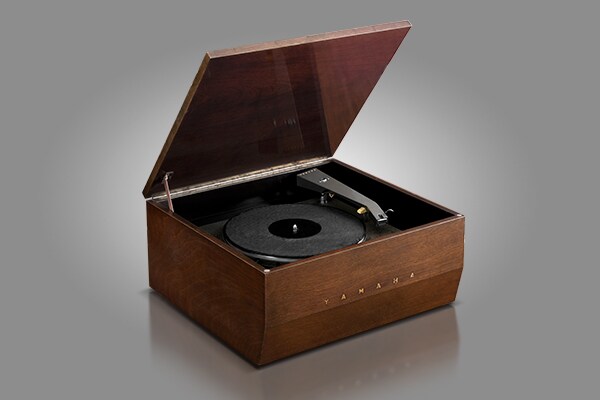
    YAMAHA HIFI PLAYER
  • 1975 TURNTABLE YP-1000

    A turntable made from strictly selected parts carefully tailored for a dignified, luxurious appearance.
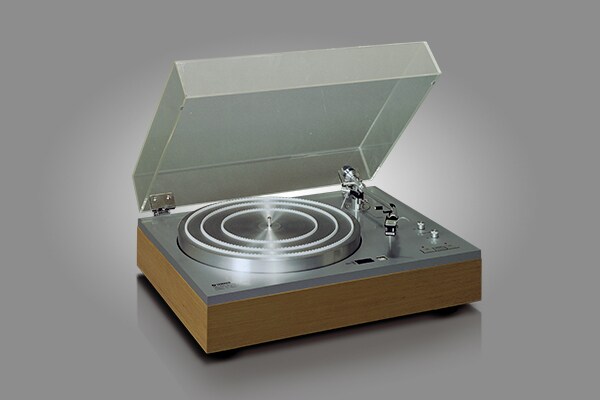
    TURNTABLE YP-1000
  • 1976 CASSETTE DECK TC-800GL

    Tools taken to the extremes of their essence through the “Bellini Angle.” A masterpiece cassette deck by a world-class designer.
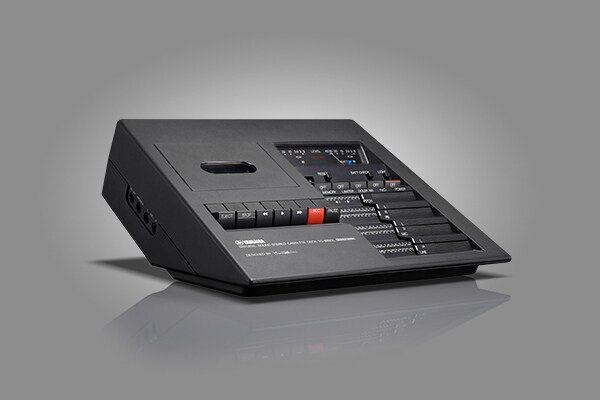
    CASSETTE DECK TC-800GL
  • 1978 TURNTABLE PX-1

    The first player equipped with a symmetrical linear arm.

    The “dream player“ that offered a glimpse of the future.
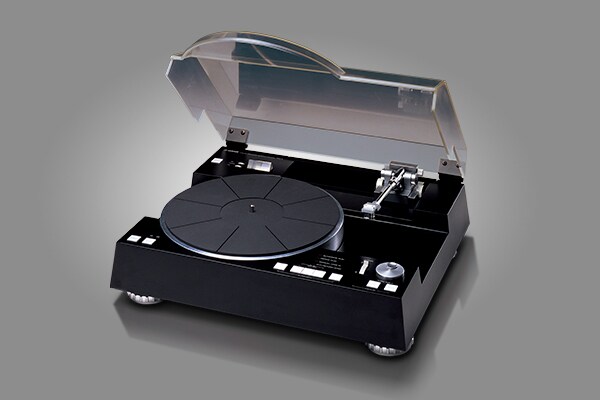
    TURNTABLE PX-1
  • 1982 TURNTABLE GT-2000

    In the birth year of the CD, a large heavyweight player that returned to the origins of analog with fully manual operation.
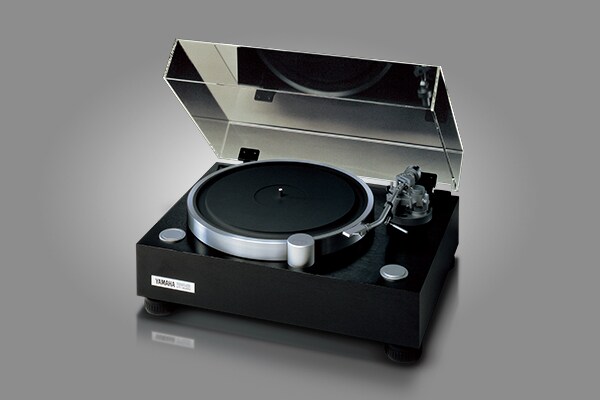
    TURNTABLE GT-2000
  • 1982 CD PLAYER CD-1

    Yamaha’s first CD Player, designed with our own aesthetics of sound and appearance.
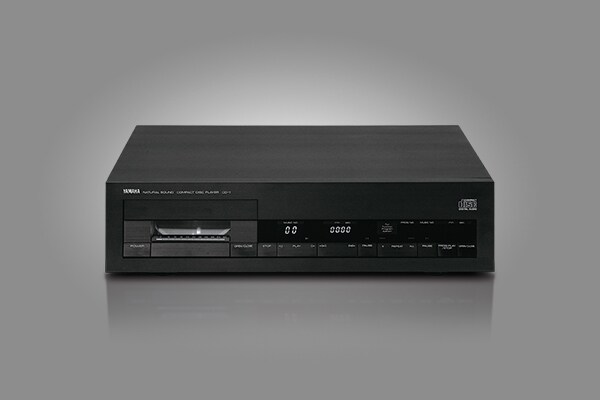
    CD PLAYER CD-1
  • 1983 CD PLAYER CD-1A

    The ultimate version of the CD-1 series, which changed the preconception that “CD sound has no personality.”
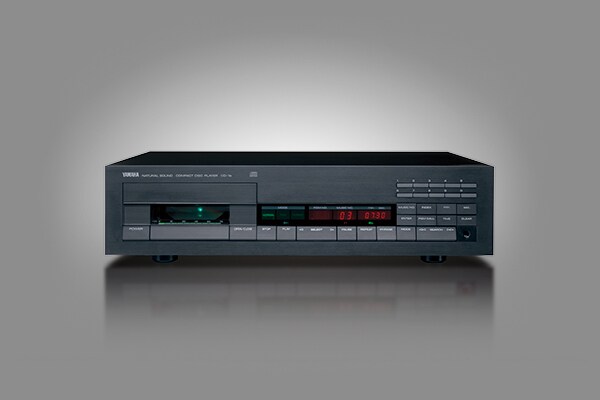
    CD PLAYER CD-1A
  • 1983 CD PLAYER CD-X1

    Our original best-selling CD Player that broke the 100,000 yen barrier for the first time.
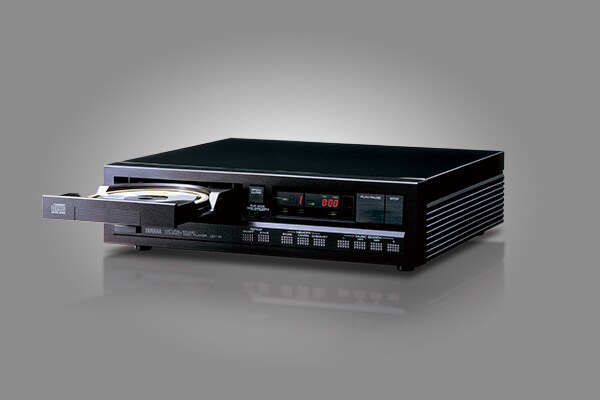
    CD PLAYER CD-X1
  • 1985 CD PLAYER CD-2000/CD-2000W

    A second generation high grade unit that used our unique VMA method to focus on mechanical vibrations during CD playback.
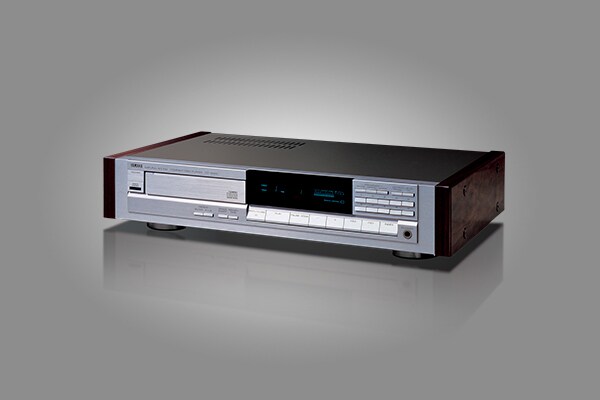
    CD PLAYER CD-2000/CD-2000W
  • 1986 CD PLAYER CDX-2200

    Featuring the world’s first 18-bit precision D/A conversion system, this unit ignited the high-bit arms race.
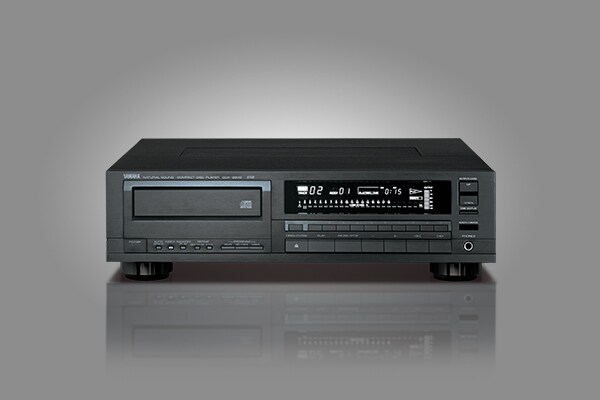
    CD PLAYER CDX-2200
  • 1987 CASSETTE DECK K-1X

    The culmination of the K-1 cassette deck series, maximizing the broadband dynamic range prominent in CD recordings.
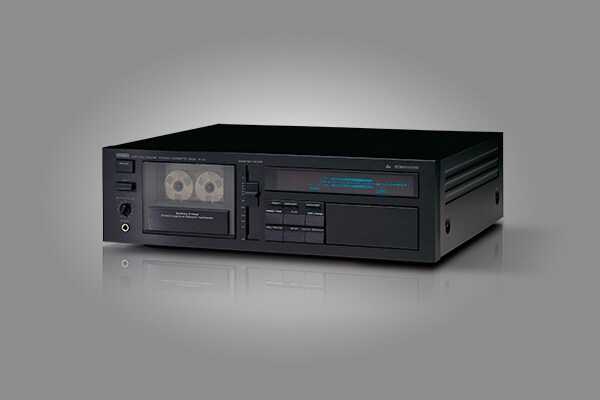
    CASSETTE DECK K-1X
  • 1987 CD PLAYER CDX-10000

    A special release bringing together all the values of separate units in one body in honor of the 100th anniversary of Yamaha’s founding.
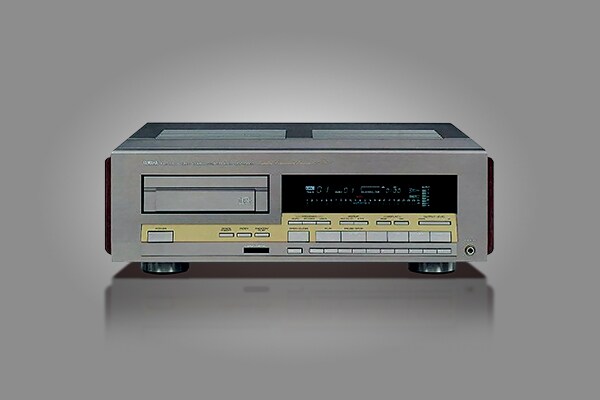
    CD PLAYER CDX-10000
  • 1987 CD PLAYER CDX-2000

    Reached an incredible 118dB S/N ratio thanks to eight times oversampling.
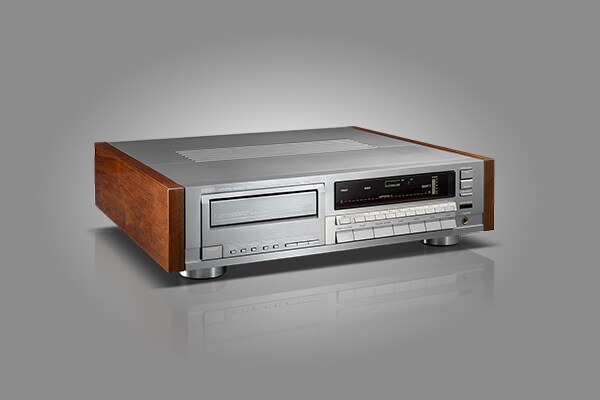
    CD PLAYER CDX-2000
  • 1988 CD PLAYER CDX-2020

    The ultimate in high-bit digital, with 8fs, 22-bit operation and four-DAC configuration.
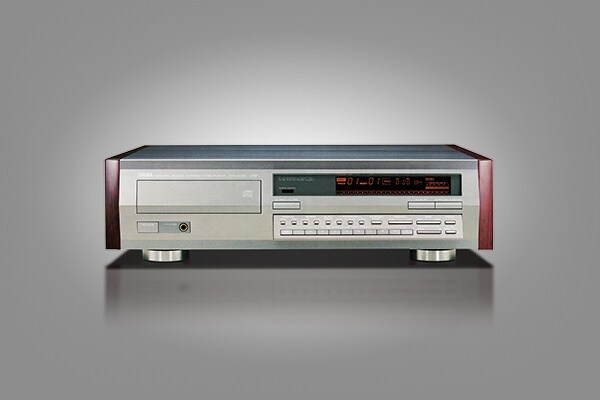
    CD PLAYER CDX-2020
  • 1991 CD PLAYER GT-CD1

    A superlative CD Player embodying the GT Concept that took audio back to its origins.
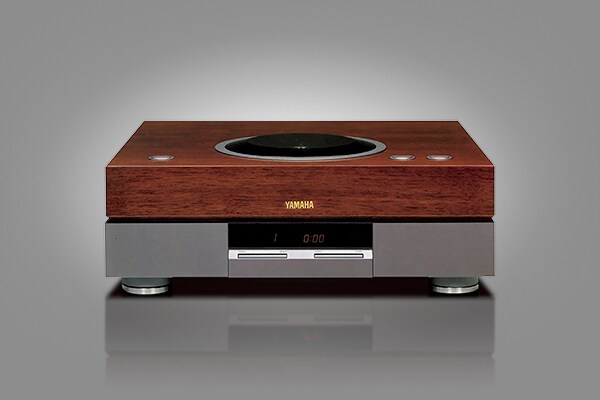
    CD PLAYER GT-CD1
  • 2010 NETWORK PLAYER NP-S2000

    Yamaha’s first top-of-the-line network player, that pursued overwhelming high sound quality.
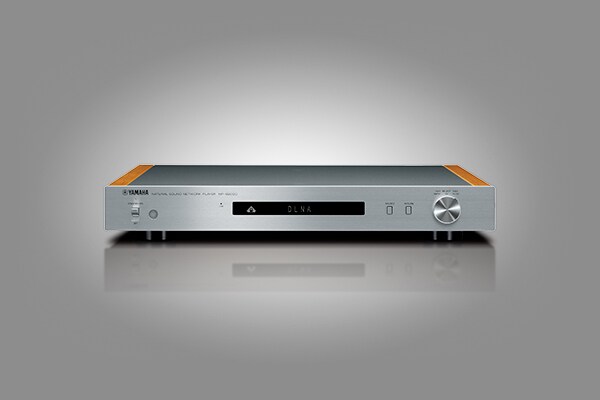
    NETWORK PLAYER NP-S2000
  • 2013 CD PLAYER CD-S3000

    Drawing on the rich inheritance of Yamaha HiFi, this top-of-the-line model ushered in a new era of audio.
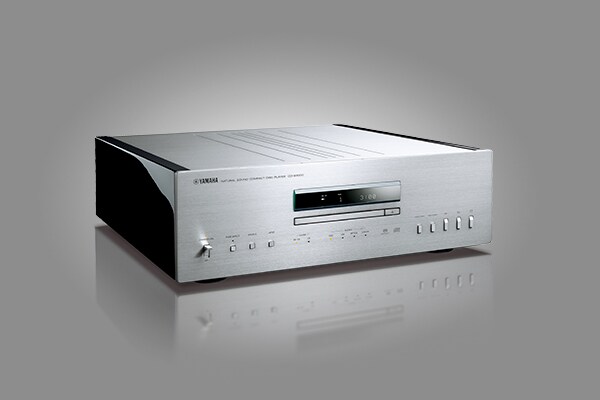
    CD PLAYER CD-S3000
  • 2019 TURNTABLE GT-5000

    In pursuit of the pure essence of analogue playback, this massive turntable fused the traditional “GT” concept with the finest modern technology and materials.
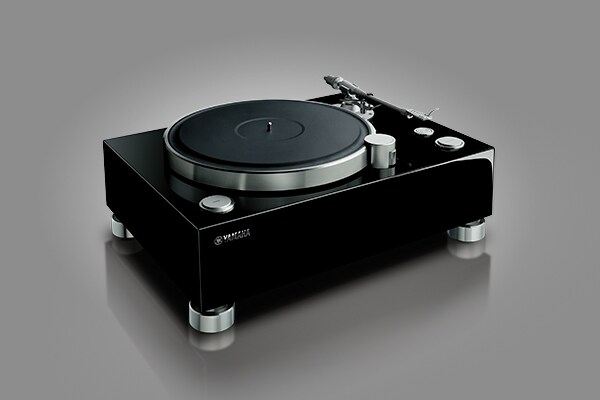
    TURNTABLE GT-5000

AMPLIFIERS

  • 1972 INTEGRATED AMP CA-700

    Handles a wide variety of uses with its rich assortment of input and output terminals. Yamaha’s integrated Amplifier debut model.
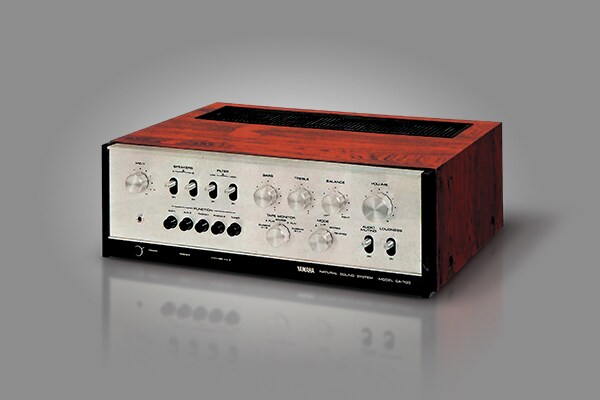
    INTEGRATED AMP CA-700
  • 1973 INTEGRATED AMP CA-1000

    A true audiophile amplifier including a Class A/B operation selector, all enclosed in a beautiful form.
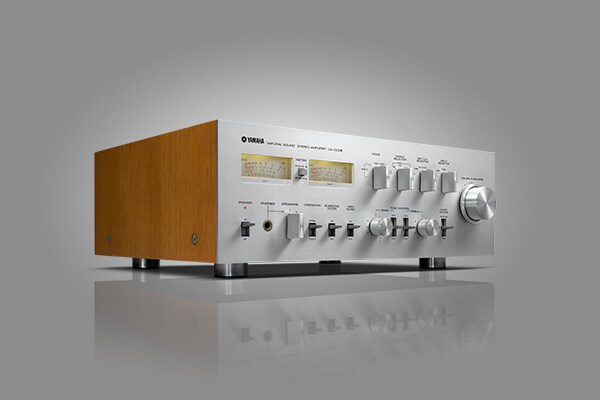
    INTEGRATED AMP CA-1000
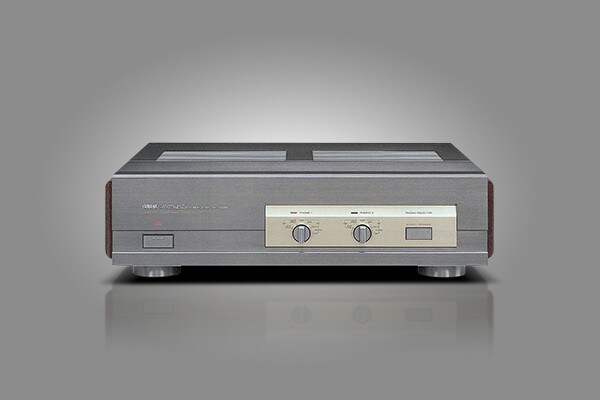
  • 1974 POWER AMP B-I

    The dream output element, the vertical power FET, was used for the first time in this all-FET power amplifier.
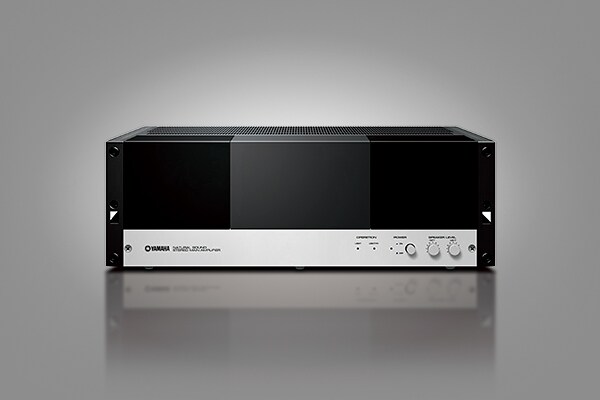
    POWER AMP B-I
  • 1975 CONTROL AMP C-1

    An All-FET high-end control amplifier that combined musical concepts with advanced sound quality control features.
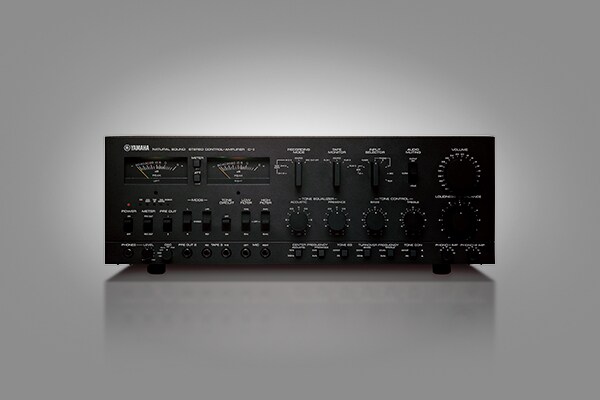
    CONTROL AMP C-1
  • 1976 INTEGRATED AMP CA-2000

    Polishing the control amp’s precision to pursue an S/N ratio approaching that of separate amps.
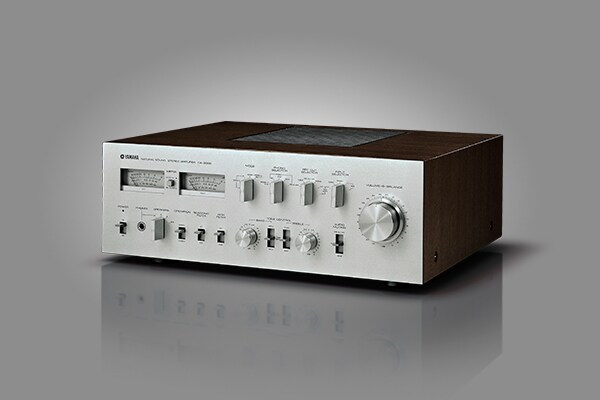
    INTEGRATED AMP CA-2000
  • 1977 POWER AMP B-3

    Yamaha’s final SIT amplifier, fully realizing the capabilities of complementary SIT technology.
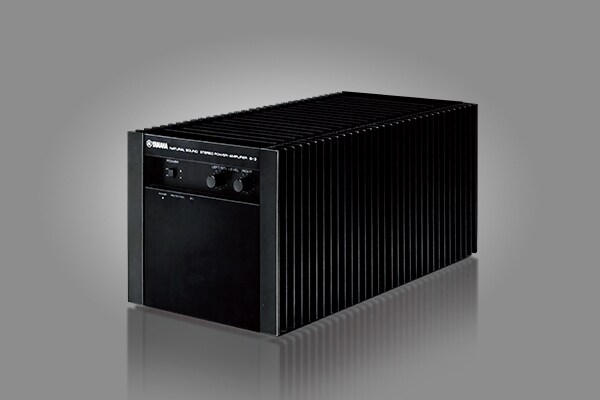
    POWER AMP B-3
  • 1977 INTEGRATED AMP A-1

    After deeply considering the meaning of DC amps, Yamaha brought out the prioritized-for-disc “straight DC configuration.”
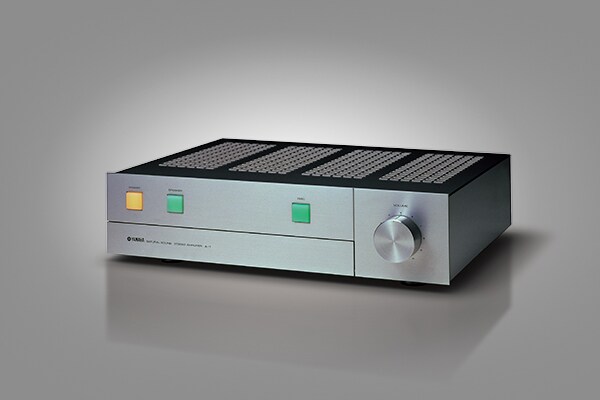
    INTEGRATED AMP A-1
  • 1978 CONTROL AMP C-2A

    The second generation of our world-renowned flat-panel control amplifier.
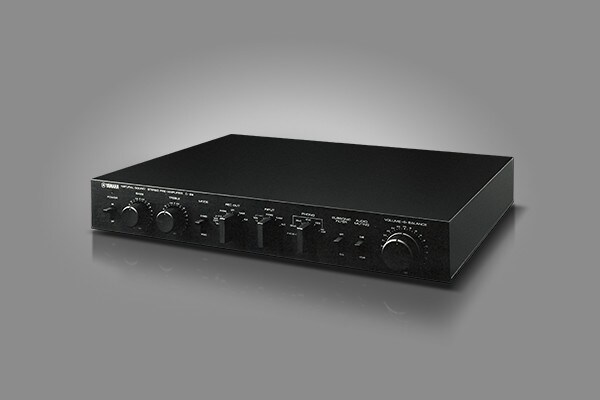
    CONTROL AMP C-2A
  • 1979 POWER AMP B-5

    Linearity at low sound levels, and high power output: you got both with the Linear Transfer Circuit.
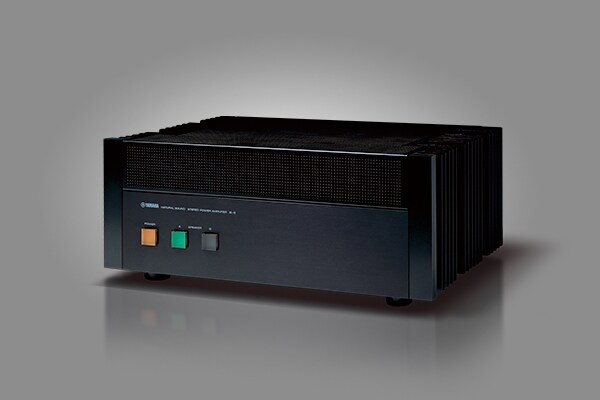
    POWER AMP B-5
  • 1979 INTEGRATED AMP A-5

    Pursuing quality over quantity, and realizing easy operation. This popular-priced model gave owners a sense of Yamaha refinement and conscientiousness.
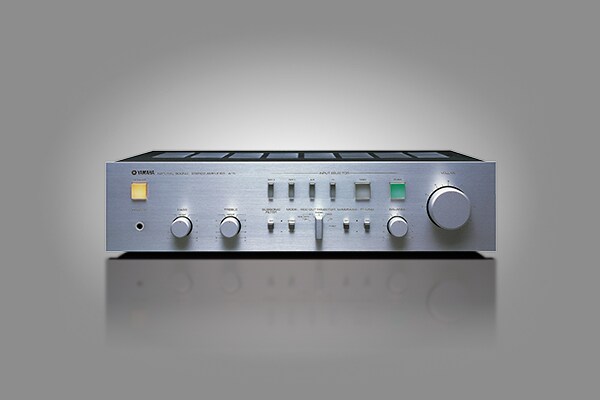
    INTEGRATED AMP A-5
  • 1979 INTEGRATED AMP A-9

    Yamaha’s flagship amplifier of the 1980s that brought the creativity of Yamaha electronics technology to flower.
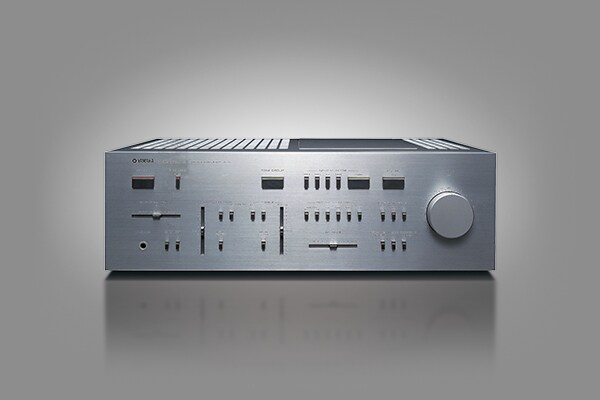
    INTEGRATED AMP A-9
  • 1980 POWER AMP B-6

    Achieved dramatic miniaturisation and higher efficiency with X Power and X Amplification.
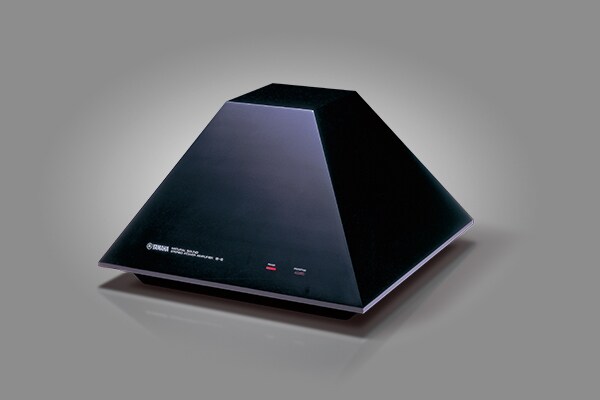
    POWER AMP B-6
  • 1983 INTEGRATED AMP A-2000

    Audio-like appearance and huge material resources. The Yamaha No. 2000 returned with a new style of Class A.
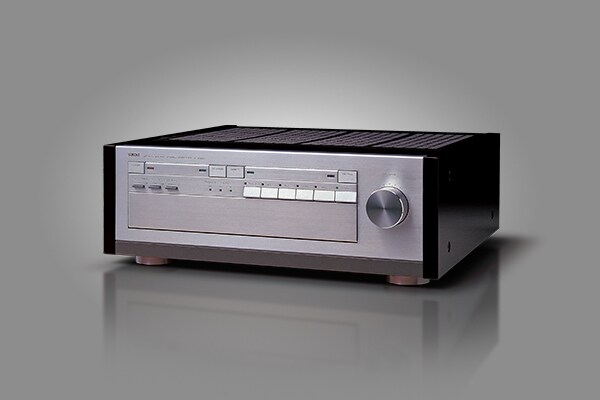
    INTEGRATED AMP A-2000
  • 1987 POWER AMP MX-10000

    Featured an HC circuit developed and employed in pursuit of ideal Class-A operation.
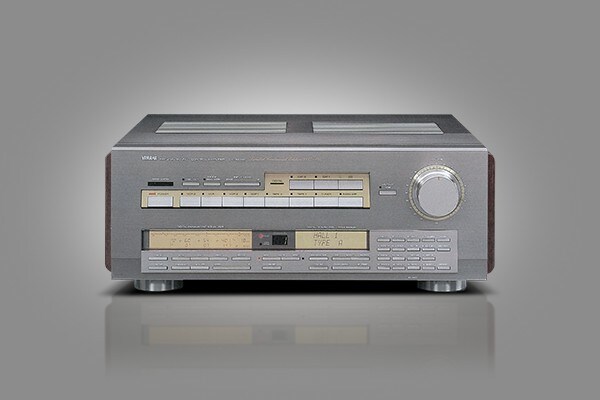
    CONTROL AMP CX-10000
  • 1987 CONTROL AMP CX-10000

    Ambitious control amplifier featuring Digital EQ and Digital Signal Processing.

    CONTROL AMP CX-10000
  • 1990 INTEGRATED AMP AX-2000A

    A super-high end integrated amp that used the HCA power amp that was the pride of the 10000 Series, and held fast to analog amplification in the digital age.
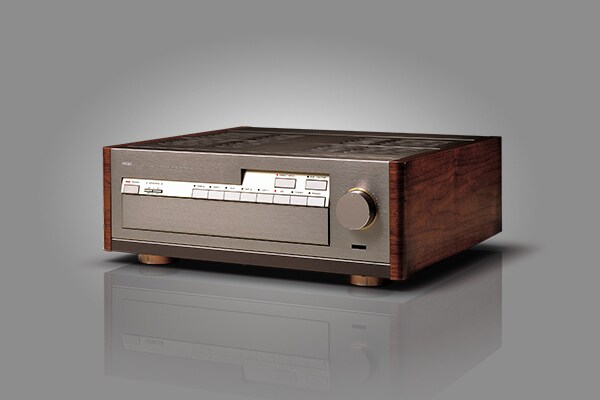
    INTEGRATED AMP AX-2000A
  • 1993 CONTROL AMP CX-1

    A remote-controlled thin-style control amplifier that aimed to set new standards.
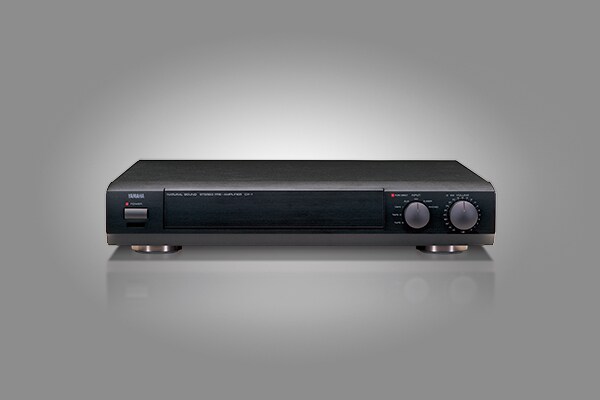
    CONTROL AMP CX-1
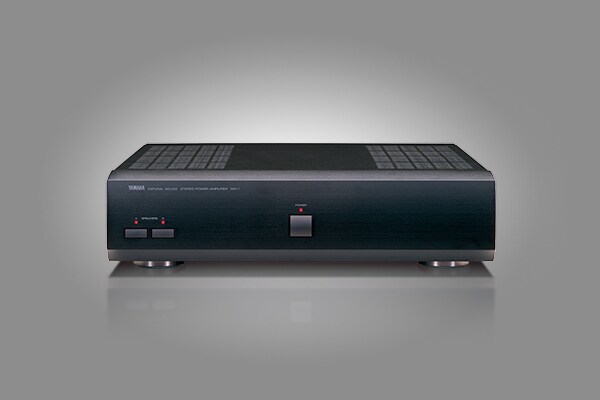
  • 1993 POWER AMP MX-1

    This thin-style high-power amplifier with versatile charm featured the definitive high-efficiency class A amplifier, the HCA circuit.
    POWER AMP MX-1
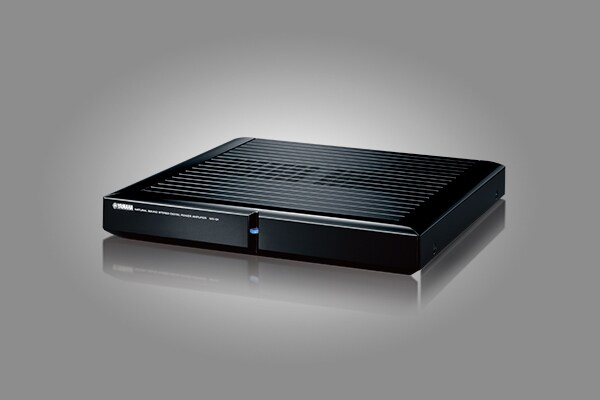
  • 2003 DIGITAL POWER AMPLIFIER MX-D1

    Digital amplifier with exceptionally high power and extraordinary sound quality, surpassing even ultra-high-class analogue power amplifiers.
    DIGITAL STEREO POWER AMPLIFIER MX-D1
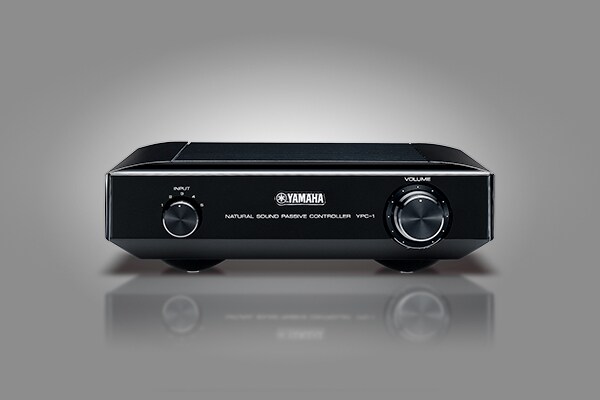
  • 2003 PASSIVE CONTROLLER YPC-1

    Top-of-the-line passive controller that achieved tracking tolerance of less than 1 dB at level of -100dB.
    PASSIVE CONTROLLER YPC-1
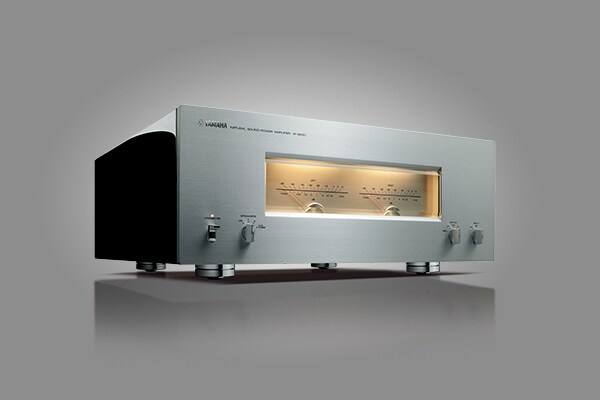
  • 2018 POWER AMPLIFIER M-5000

    Independent power amplifier which pursued the ultimate form of Yamaha’s patented Floating and Balanced design.
    POWER AMPLIFIER M-5000
  • 2018 PRE-AMPLIFIER C-5000

    Pre-amplifier which features completely independent and symmetrical circuit design to achieve ultimate musical expression.
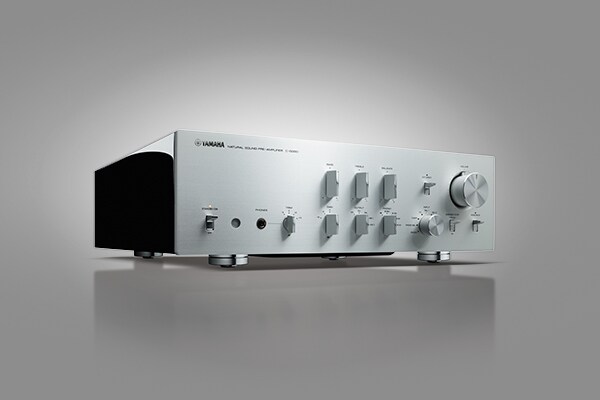
    PRE-AMPLIFIER C-5000
  • 2022 NETWORK RECEIVER R-N2000A

    Compatible with music streaming services, this network receiver inherits the supreme quality sound technology and design concept cultivated by our flagship models.
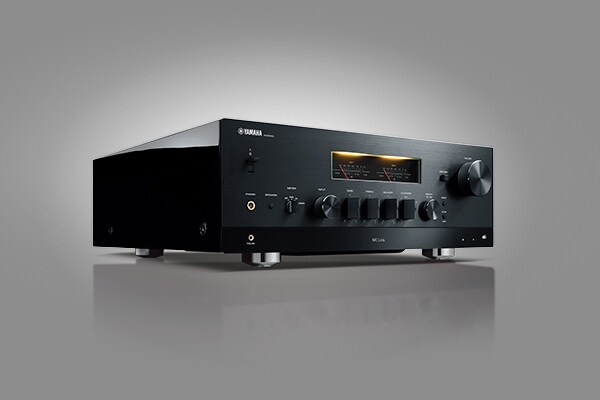
    NETWORK RECEIVER R-N2000A

SPEAKER SYSTEM

  • 1967 SPEAKER SYSTEM NS-20/NS-30

    Inspired by musical instrument making, these were the first large speaker unit to bring the world the natural sound it was asking for.
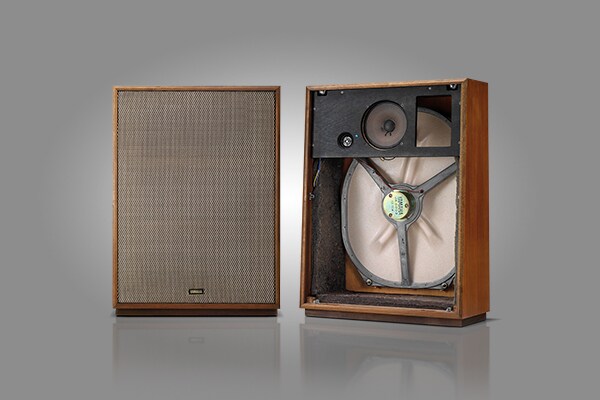
    SPEAKER SYSTEM NS-20/NS-30
  • 1972 SPEAKER SYSTEM NS-690/NS-670

    Won countless fans with its natural and delicate “European sound” and beautiful plain wood cabinet.
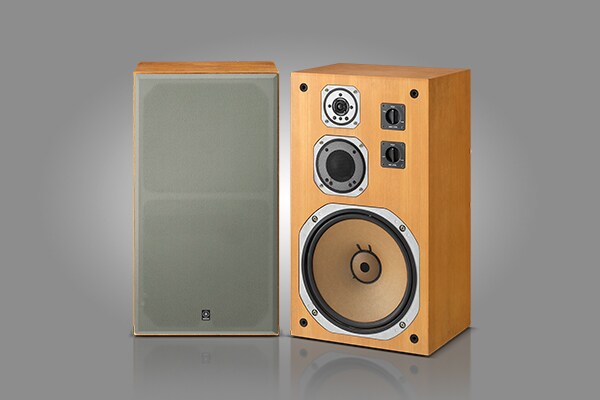
    SPEAKER SYSTEM NS-690/NS-670
  • 1974 SPEAKER SYSTEM NS-1000/1000M

    The world’s first pure beryllium diaphragm in a masterpiece professional monitor that gained Yamaha much respect.
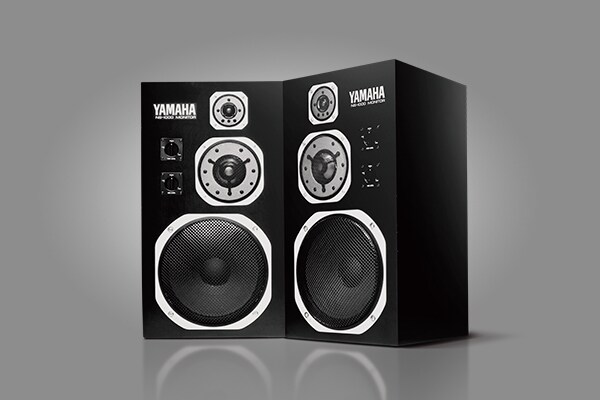
    SPEAKER SYSTEM NS-1000/1000M
  • 1978 SPEAKER SYSTEM NS-451

    With its revolutionary sheet process, the white cone redefined the sound quality of the entry-level speaker.
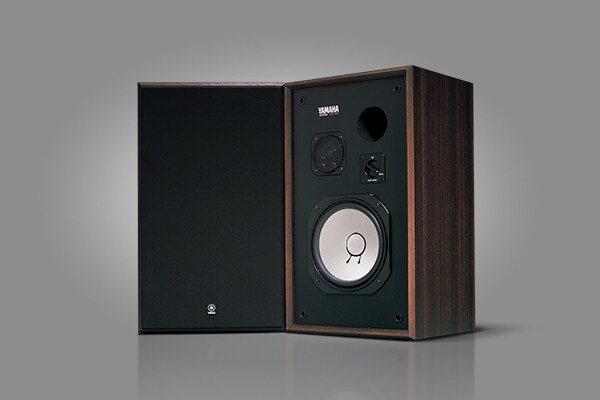
    SPEAKER SYSTEM NS-451
  • 1978 SPEAKER SYSTEM NS-10M

    The original 10M that launched a boom, built without compromise for powerful sound exceeding its size and a playful spirit.
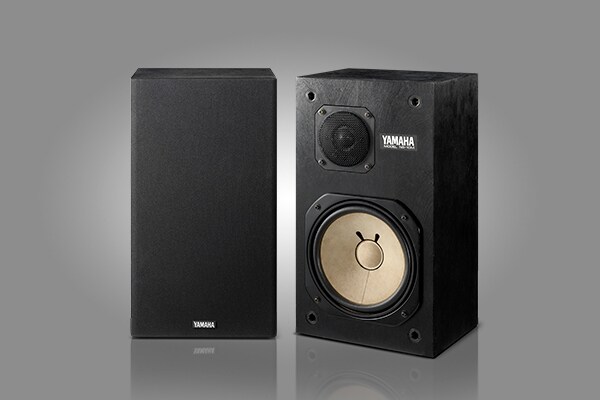
    SPEAKER SYSTEM NS-10M
  • 1978 SPEAKER SYSTEM FX-1

    Loaded with high technology, a superior floor speaker that led the way among the world’s studio monitors.
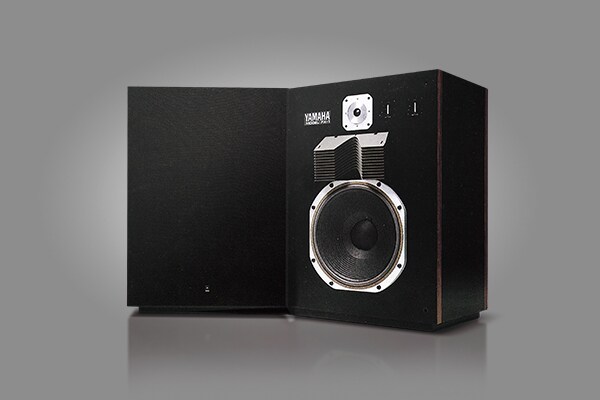
    SPEAKER SYSTEM FX-1
  • 1980 SPEAKER SYSTEM NS-690III

    The ultimate version of the NS-690 series, featuring a 100% grand piano soundboard-grade spruce woofer.
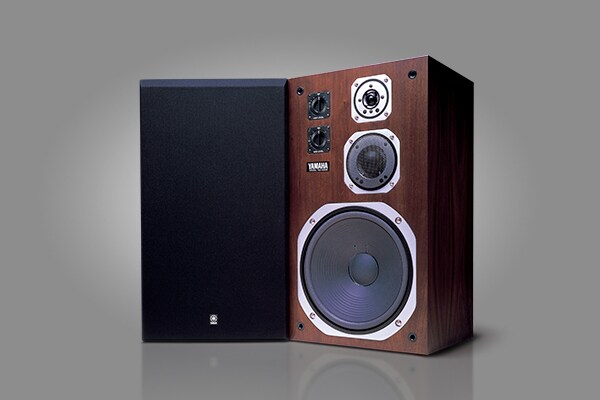
    SPEAKER SYSTEM NS-690III
  • 1981 SPEAKER SYSTEM FX-3

    Permeated by the Yamaha way, this large floor speaker added rich bass to the clarity of pure beryllium.
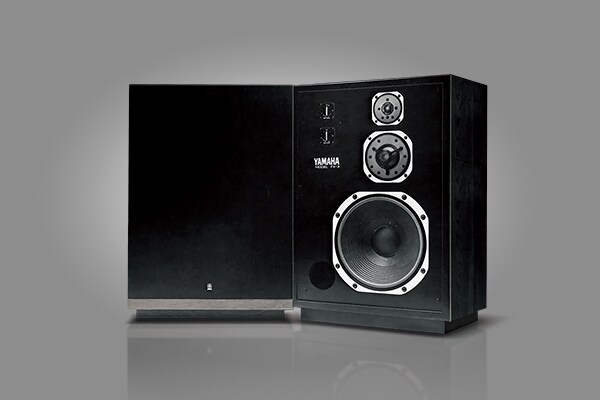
    SPEAKER SYSTEM FX-3
  • 1982 SPEAKER SYSTEM NS-2000

    Developed as a high end model with NS-1000M design, incorporating the trends of the ‘80s like pure carbon fiber cone woofers.
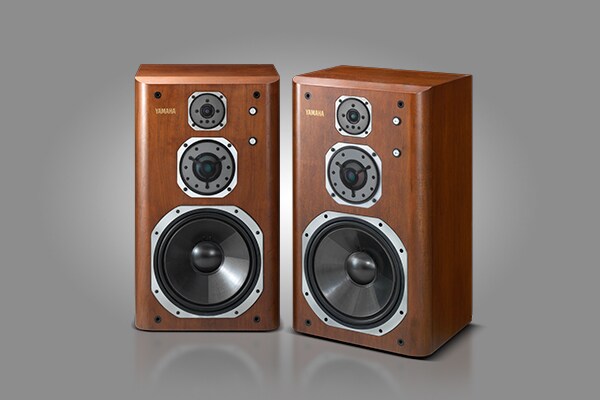
    SPEAKER SYSTEM NS-2000
  • 1986 SPEAKER SYSTEM NS-700X

    A 31cm three-way bookshelf model deployed in the heat of the popular price range competition.
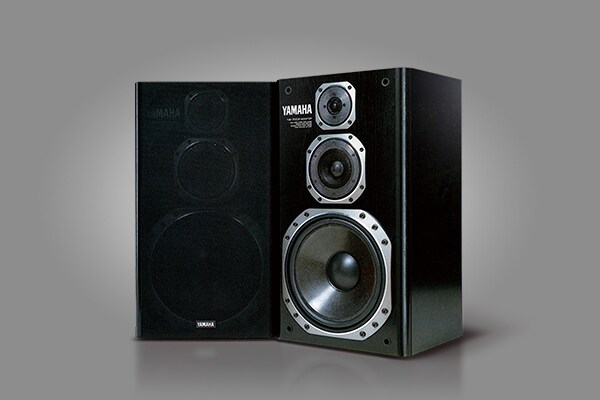
    SPEAKER SYSTEM NS-700X
  • 1987 SPEAKER SYSTEM NS-10M PRO

    With improved usability as a professional monitor, nothing else changed in this second generation 10M.
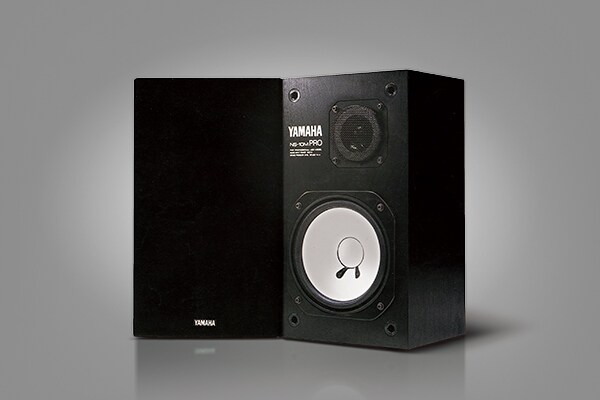
    SPEAKER SYSTEM NS-10M PRO
  • 1987 SPEAKER SYSTEM NSX-10000

    Using CG beryllium to eliminate transmission loss in large crystallisation, this was the 10000 Series’ bookshelf unit.
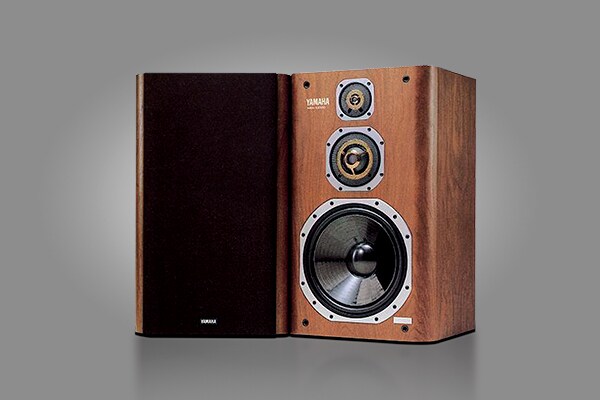
    SPEAKER SYSTEM NSX-10000
  • 1988 SPEAKER SYSTEM NS-1 CLASSICS

    A simple and delicate two-way bookshelf model that took speaker manufacturing back to its basics.
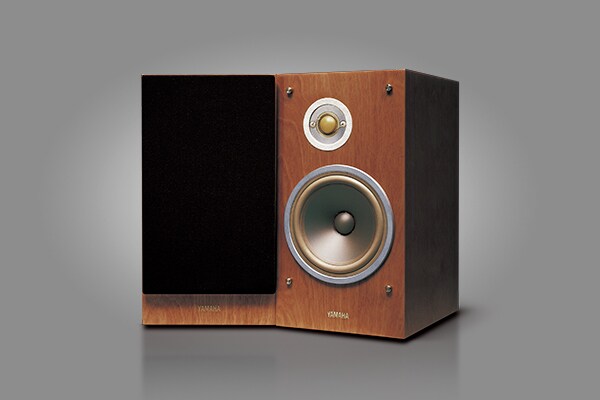
    SPEAKER SYSTEM NS-1 CLASSICS
  • 1989 ACTIVE SERVO SPEAKER SYSTEM AST-S1/AST-A10

    The first-ever active servo speaker system, using the new AST method to expand the limits of low-frequency playback.
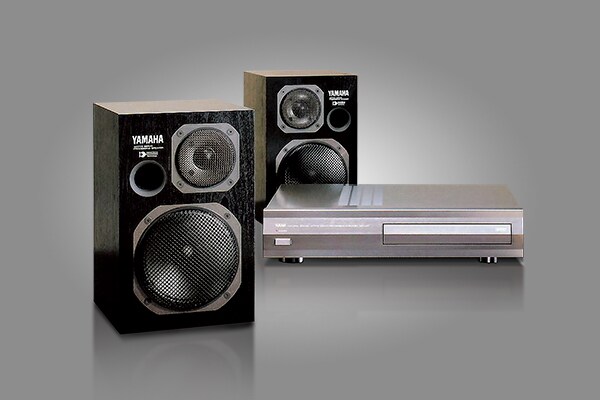
    ACTIVE SERVO SPEAKER SYSTEM AST-S1/AST-A10
  • 1991 1991_ACTIVE SPEAKER SYSTEM GF-1/GFD-1

    A flawlessly superior active speaker system that sought to completely reproduce the real value of the unit itself.
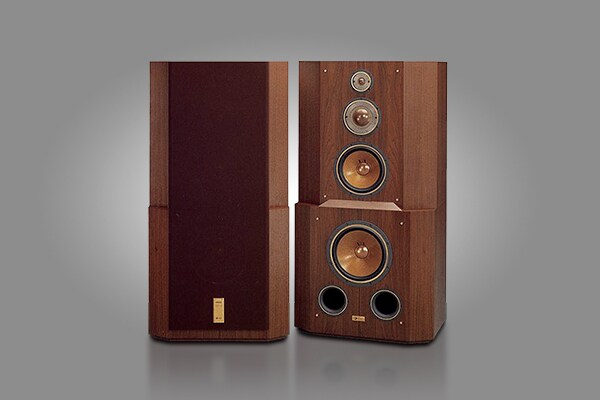
    ACTIVE SPEAKER SYSTEM GF-1/GFD-1
  • 2003 SPEAKER SYSTEM NS-PF7

    A micro speaker for near-field listening equipped with the world’s first magnesium cone unit.
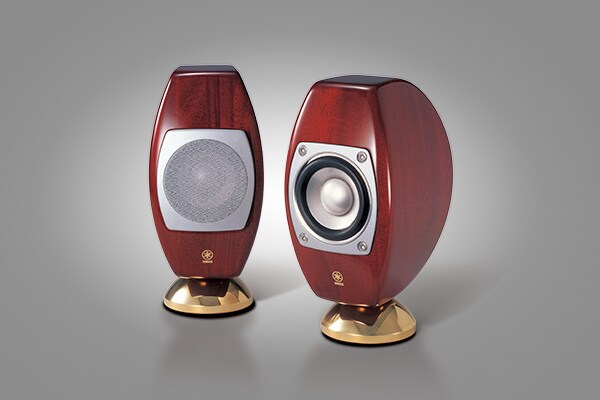
    SPEAKER SYSTEM NS-PF7
  • 2006 SPEAKER SYSTEM SOAVO-1

    Sophisticated styling with a flare-shaped bass reflex port and a cabinet without any parallel surfaces brings to life the technology behind making musical instruments to produce an extraordinary musical experience.
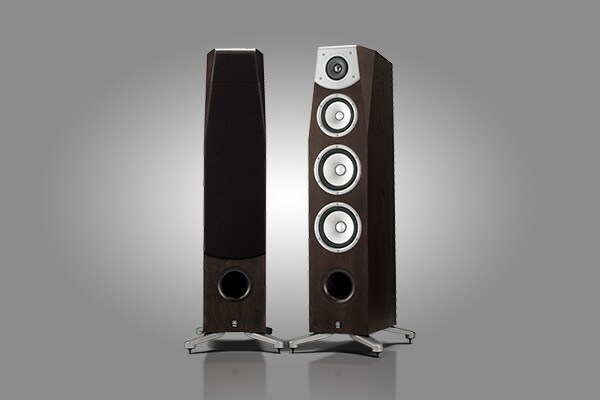
    SPEAKER SYSTEM SOAVO-1
  • 2015 SPEAKER SYSTEM NS-5000

    Flagship system with 100% Zylon® diaphragms for achieving true tonal balance across all speaker units.
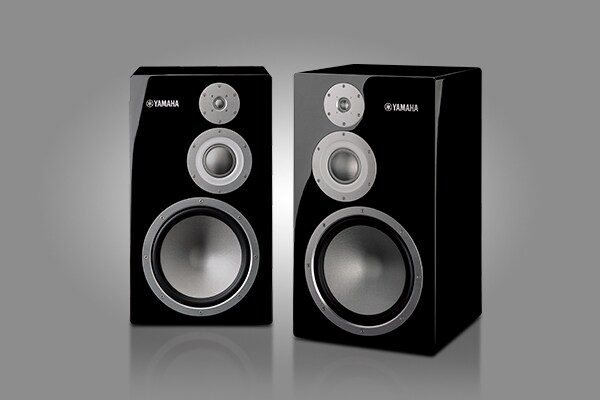
    SPEAKER SYSTEM NS-5000

HEADPHONES AND OTHER

  • 1973 ALUMINUM HORN TWEETER JA-0506

    Enthralled the DIY speaker crowd with exhilarating sound and a beautifully shining, precision machined aluminum horn.
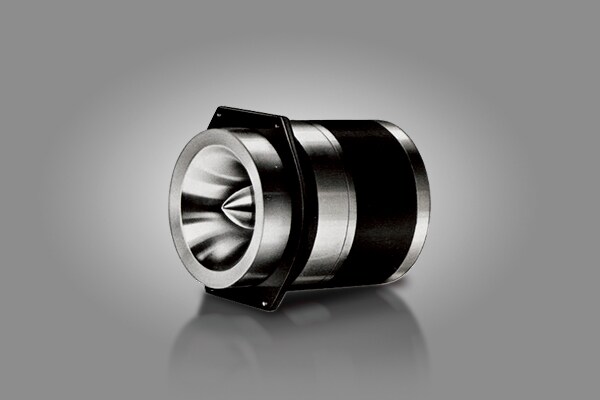
    ALUMINUM HORN TWEETER JA-0506
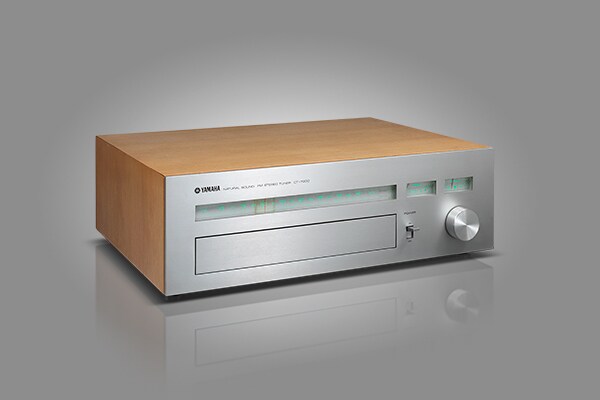
  • 1975 FM TUNER CT-7000

    An ultimate-class experimental tuner four years in the making.

    FM TUNER CT-7000
  • 1976 HEADPHONES HP-1

    Full drive orthodynamic headphones created through the fusion of the developers’ spirit of inquiry and high manufacturing technology.
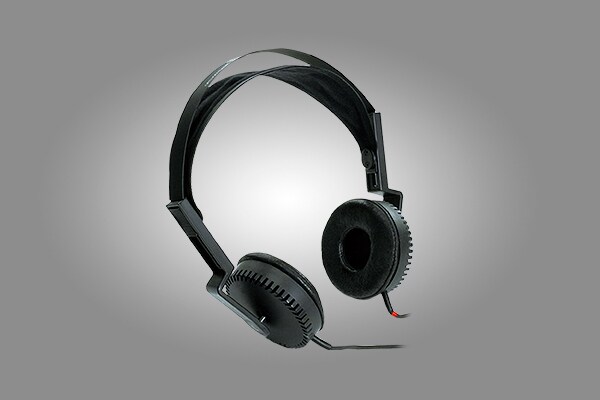
    HEADPHONES HP-1
  • 1979 CHANNEL DIVIDER EC-1

    A 3-way crossover network that expanded the parameters as far as the imagination could take them.
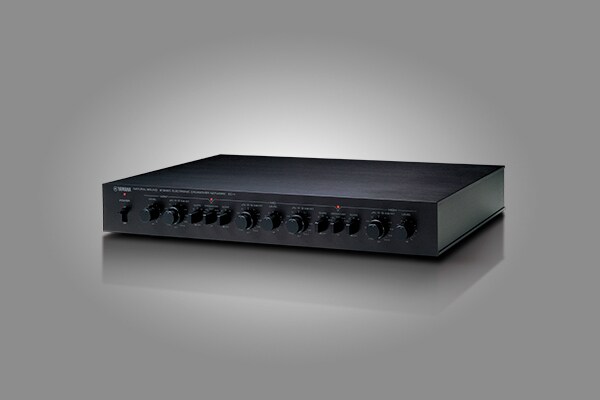
    CHANNEL DIVIDER EC-1
  • 1979 EQUALIZER AMP HA-2

    Part of the amplifier circuit was moved to the headshell. Targeted a degree of purification of the signal circuit with a surprising idea.
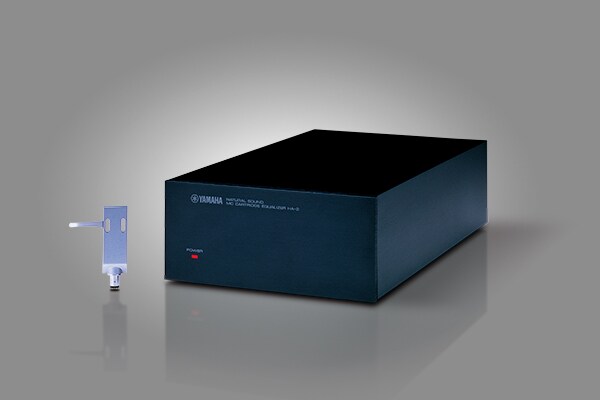
    EQUALIZER AMP HA-2
  • 1980 SPEAKER UNIT JA-2070

    A lavish but simple masterpiece full range unit that employed a beryllium cap.
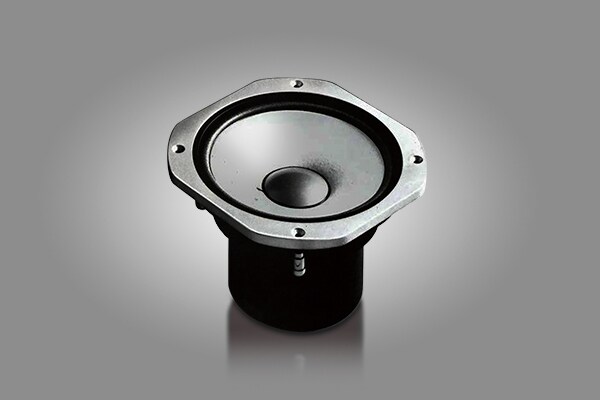
    SPEAKER UNIT JA-2070
  • 1982 PHONO CARTRIDGE MC-2000

    The pinnacle of Yamaha MC cartridges, employing a lightweight vibration system of 0.059 mg, a world record at the time.
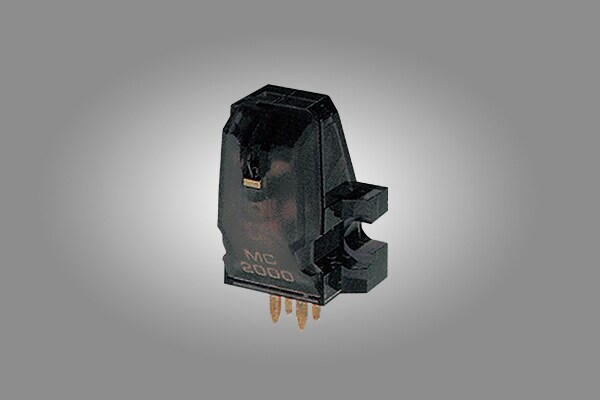
    PHONO CARTRIDGE MC-2000
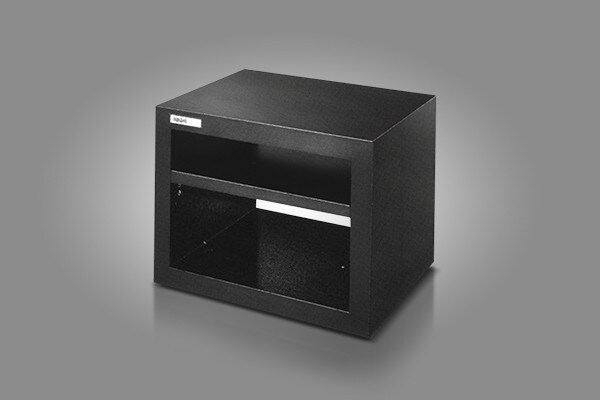
  • 1982 AUDIO RACK GTR-1B

    Heavy-duty audio rack imbued with the GT Concept.

    AUDIO RACK GTR-1B
  • 1985 TONEARM YSA-2

    Limited-edition straight tonearm for the GT Series turntables, with tremendous expressive performance.
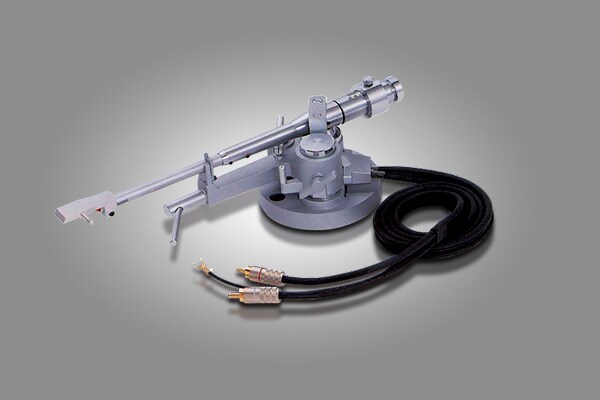
    TONEARM YSA-2
  • 1986 SPEAKER STAND SPS-2000

    A high class speaker stand that luxuriously employed African Paddock, a rare wood used in marimbas.
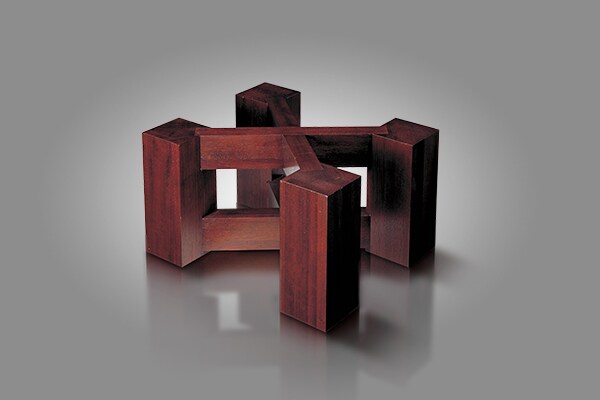
    SPEAKER STAND SPS-2000
  • 1986 DIGITAL SOUND FIELD PROCESSOR DSP-1

    Sought to bring true HiFi reproduction to multi-channel playback.
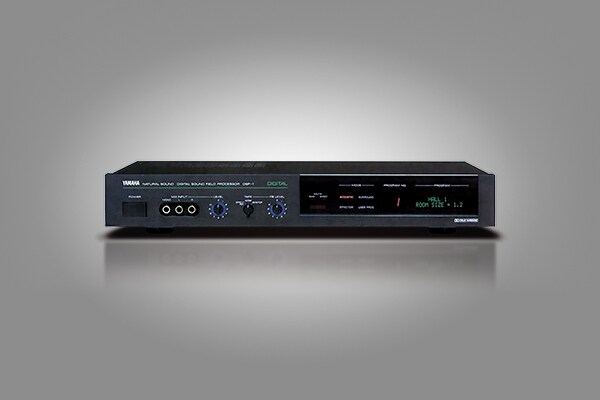
    DIGITAL SOUND FIELD PROCESSOR DSP-1
  • 1987 PHONO EQUALIZER HX-10000

    Equipped with two independent input circuits.

    PHONO EQUALIZER HX-10000
  • 1987 SPEAKER STAND SPS-10000

    Custom stand for the NSX-10000 speakers made of African padauk.
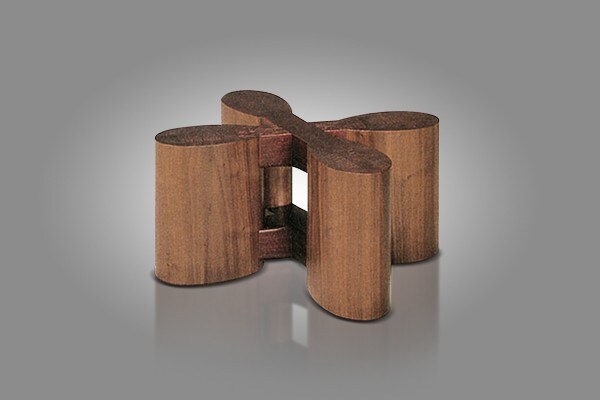
    SPEAKER STAND SPS-10000
  • 2022 HEADPHONES YH-5000SE

    Flagship model that takes the historic ORTHODYNAMIC™ driver even further with advanced technology and meticulously selected materials.
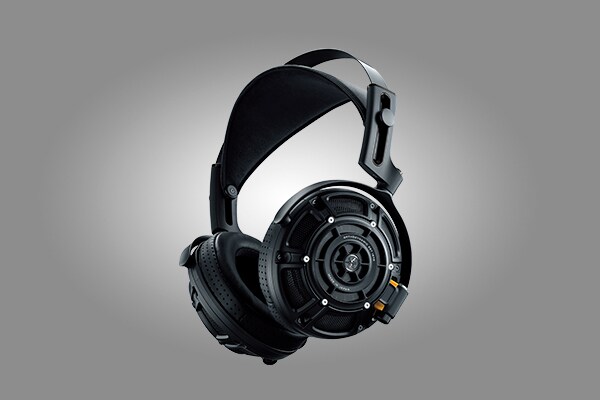
    HEADPHONES YH-5000SE

Discover More

YAMAHA HIFI PLAYER

Yamaha’s debut product demonstrated solid sound and durability, finding a home in broadcast studios and elsewhere. Functional styling by the then-new GK Design Group added to its value.

The A-1 HiFi player was released in 1954, and marked the start of Yamaha HiFi. The tonearm came with a Fairchild-type monaural cartridge, but could also be replaced with General Electric or Pickering, which were popular cartridges at the time. The turntable drive system was an idler type. Its rich sound and durability was highly recognized as it was delivered to educational institutions and broadcasting stations.

Furthermore, the design was by the just established GK Design Group, soon to become one of Japan’s most prestigious design firms. Even in the early 1950s, this product was given a modern design with a simple and clear beauty while maintaining solid functionality.

TURNTABLE YP-1000

Yamaha shot to popularity in the HiFi component world on the success of its “White Wood” (Castor) series of products like the CA-1000 integrated amp (1973) and NS-690 speaker (also 1973), but when it came to turntables its lineup was limited to entry level and intermediate class models having older designs, without a model that could match up with the CA-1000. So when the second-generation “White Wood” series integrated amplifiers such as the CA-2000 and CA-1000III appeared in 1976, three newly designed turntables were introduced alongside of them to be used as a set.

The YP-1000 was the top model of those three. With a direct-drive system, its 20-pole, 60-slot brushless DC servo represented the highest peak specifications of the time. Combined with this were a 31cm diameter turntable precision machined from a single aluminum plate and featuring an embedded thin rubber ring in place of a turntable sheet to highlight the beauty of the background, and highly sophisticated European styling. It also featured first-class equipment considered standard issue among connoisseurs like the Stax UA-7, a tonearm with industry-leading high sensitivity, and the classic luxury MM Shure V-15 Type III cartridge.

CASSETTE DECK TC-800GL

Like the HP-1 headphones, the TC-800GL stereo cassette deck was the product of a creative concept from world-class industrial designer Mario Bellini. Bellini was already known as a big name through his design work on Olivetti typewriters and other projects, and this pioneering collaboration with one of the leading designers in the 1980s drew a great deal of attention.

This unit’s greatest feature was its solution to the problem of choosing a stationary or portable cassette deck, a solution that came in the form of a versatile design that seamlessly fused both advantages. Its distinctive form came to be referred to as the “Bellini Angle,” a design incorporating exhaustive calculations of every angle so that whether looking down from above or placed at eye level the operating unit’s text and readouts, the level meter and the running tape could all be easily viewed. The flap on the rear was retractable for easy portability.

Along with AC it could run on UM2 batteries (nine) or a car battery, giving it three options for power. Enhancements such as mic input and line input mixing function, two-stage peak indicator, limiter for preventing excessive input levels, pitch control and more made it ideal for practical use in live recording and musical instrument practice. Thanks to its large flywheel and high precision capstan axis, it achieved a ‘wow and flutter’ rating of 0.057% or less outstanding for a portable machine and representative of a musical instrument manufacturer, but the inertia of the large flywheel was both a blessing and a curse as it proved unsuitable for recording or playback while walking. For that reason the unit was not equipped with a shoulder strap as to be expected for a portable machine, instead offering an optional attaché-type carrying case.

With a basic one motor, two head cassette deck construction, to be honest it didn’t do much to alleviate the impression that it was relatively expensive. But at the same time, the out-of-reach pricing gave it the air of an exclusive item and it came to be idolized and coveted even outside the cassette fanatic scene. At the beginning of the original catalog the following sentence was written: “It possesses a charm that is somehow almost heart-wringing...” which fit the TC-800GL perfectly.

It should be noted that a lower-cost version of the TC-800GL omitting features such as Dolby NR and the 3-power drive was released simultaneously. This model was available with either a black or ivory body color.

TURNTABLE PX-1

While a conventional pivot arm moves the onboard cartridge in an arc, a linear tracking arm (tangential arm) moves the cartridge in parallel, like the cutter head used in cutting the master for analog records, resulting in a constant contact angle between the sound groove and cartridge. This is generally considered to produce higher fidelity sound reproduction.

Even in the early 1960s there were already some examples of practical usage, and set against the background of general progress in electronic technology it came back into the spotlight in the mid-1970s. But however it may have been in principle when viewed from a hobby standpoint, the reality was that no linear tracking arm was comparable in sound quality to a superior quality pivot arm.

To break through that status quo, the PX-1 released in 1978 was Yamaha’s first linear tracking player with the sound quality potential to match the limits of the tangential arm. The PX-1 was an outstanding player packed with a wealth of features including a 5.6kg carved ultra-duralumin turntable, an aluminum diecast single-piece cabinet and a power supply unit contained in a separate housing. Its total body mass reached 27kg with the power supply making up another 5kg.

However, most of the development resources applied to this unit went into the “symmetrical linear arm” symmetric lightweight high-sensitivity electronically controlled linear tracking arm. The technology was all intended to overcome the weaknesses of conventional linear tracking, to prevent any unbalanced stress on the sound groove under any conditions, and to eliminate vibration and noise associated with the movement of the arm. To achieve these ends, the most advanced control technology and mechanical design were utilized.

Furthermore, the tonearm unit was designed for shell replacement, with a shell-integrated pipe for a universal shell with the best characteristics possible, and an attachment pipe for a general shell. It took into account the enjoyment of the high-level hobbyist. The symmetrical linear arm PX series lineup expanded in 1979 with the PX-2 and again in 1981 with the PX-3, combining with its own sophisticated arm motion to form a unique presence.

CD PLAYER CD-1

Yamaha released its first CD Player in 1982, just after the birth of the CD. Its groundbreaking features included a slide-out disc loading drive mechanism rather than tray-loading, component-style front controls, a mirror that let you see the recorded side of the spinning disc, and an LED bar graph that showed the approximate position of the pickup. For an era familiar only with the analog record, it was probably a natural assumption that the disc and pickup were meant to be seen during play. The choices for a main device were still limited, but this unit straightforwardly emphasized the “sonic difference” with linear 16-bit twin D/A converters and separate power supplies for the digital and analog elements, and laid claim to technical uniqueness with a custom IC developed in-house at the heart of its control system. More than 30 years, later the attention to every detail and neat styling of the Yamaha aesthetic have not lost their luster.

TURNTABLE GT-2000

In 1982, the year that saw the debut of the CD, Yamaha’s turntable lineup, up to then always following a high technology course, saw a new model that suddenly took analog back to its origin. This was the GT-2000 large heavyweight player, taking the GT part of its name from the first two letters of the words “Gigantic & Tremendous.”

While its predecessor PX series had features like a state-of-the-art symmetrical linear arm and feather touch full auto mechanism, the new GT-2000 was a simple manual player with a conventional S-shaped long arm, not even having pitch control. With a density and accuracy on a par with solid wood thanks to a hot forging method, the turntable measured 374mm in diameter and weighed 5.8kg including a 300g rubber sheet. With a unique shape featuring a high outer edge it achieved a massive inertia of 1200kg/㎠. A powerful direct-drive motor boasting startup torque of 2kg/cm made possible a positive and negative two-way servo that could instantaneously apply torque in the opposite direction during both acceleration and deceleration, and when used with the external power supply sold separately it was possible to operate the electronic brake by using the main body power switch as in broadcasting equipment.

Because of the turntable’s non-standard size it might be hard to understand its scale in the photograph, but the cabinet measured 545mm wide.

The rounded protrusions in the right front of the turntable were finger rests, positioned to prevent the palm from touching the edge of the large rotating turntable while lowering the needle.

The GT-2000 also made owners swoon with a range of attractive accessories that let them enjoy customizing their units with their own hands. These included the previously mentioned YOP-1 external power supply, the YAB-1 32kg anchor block that held the cabinet from the left and right, the YDS-1 disc stabilizer utilizing a brass platter and electric absorption pump, and the YSA-1/YSA-2 straight tonearm. Also on the accessories list was an 18kg gunmetal turntable that when installed to replace the standard turntable tripled its rotational inertia. The 120,000 yen price tag for this turntable was surprising enough, but a bigger deal was that the GT-2000’s motor and bearings were tough enough to handle a turntable three times heavier.

At 138,000 yen (accessories separate) this unit’s price could be called reasonable, helping it become a big hit as an analog player in the CD era. While expanding the series, production continued until 1989, and in 1991 it was reissued in a limited edition for 198,000 yen. The GT-2000 had a birch veneer black paint finish, while the GT-2000L model featured a walnut veneer finish and was equipped with an auto-lifter.

CD PLAYER CD-1A

The CD-1a was introduced in 1983 as an upgraded version of the CD-1. Maintaining all the good points of the CD-1 that had earned it such a good reputation, its degree of perfection was raised with improved stability and reliability of operation, common problems for manufacturers of the earliest CD Players. In terms of sound quality, the DAC device and low-pass filter (still a high grade analog filter rather than a digital filter at the time) were reworked, delivering Yamaha’s characteristic richly musical expressiveness and helping to change people’s preconceptions that “CD sound has no personality.” In terms of its functions, the electric opener’s key tray and sub-display for memory play usage, major features of the original CD-1, had been removed, and in response to the demands of the market the new unit now featured 10 keys, a headphone jack and a new look for the display panel. Lasting only one year, the original CD-1 was short-lived, but with CD still in its early stages of development this shows that both manufacturers and consumers were still struggling with the new technology. Nevertheless the CD-1a became a long-selling item, Yamaha’s flagship product for three years.

CD PLAYER CD-X1

After initially generating tremendous expectations, the CD went into a slump once the first wave of demand had passed. The main reason was that the hardware and software were still expensive. The first CD Player to sell for under 100,000 yen, a major benchmark on the road to full-scale commercial acceptance, was the CD-X1, introduced in 1983 for 99,800 yen. The CD-X1 featured two original LSIs developed and manufactured in-house, significantly reducing the total number of parts in the player to about one-third the conventional amount and becoming Yamaha’s trump card in offering the lowest price in the industry. One of the LSIs was the YM3511 for servo-control, and the other was the YM2201 for digital signal demodulation and processing. With one-chip digital filtering and up to two times oversampling, the latter in particular achieved better sound quality and reliability while simultaneously reducing the cost. The linear 16-bit DAC device became Yamaha’s first ladder type (single). Apart from the mini-component body size and omission of a 10-key pad it was functionally comparable to a high-end model and contributed heavily to the explosive popularity and market expansion of the CD.

CD PLAYER CD-2000/CD-2000W

This was a high grade unit that was the first to incorporate Yamaha’s two original LSIs and played a major role in the development of the high performance, low cost CD Player. Standardizing the basic platform with a focus on the control system, this model led to the establishment of a rational approach to further raising the design quality of high end CD Players. In addition to the VM Stabilizer, a copper-plated steel plate attached to the back of the audio board and developed based on the VMA vibration modulation analysis method to determine the effects of vibrations during CD playback on sound quality, its features like a double bottom structure and cast iron heavy insulator gave it a high frame rigidity that helped produce a clear sound image and massive bass. It also featured a powerful power supply unit with even lower impedance and variable output allowing remote control operation, and electric analog volume control with direct connection to the power amplifier. With the linear 16-bit single DAC device, the independent left and right digital filters had an irregular configuration. This model was produced in two styles, the CD-2000 with black panels and the CD-2000W with silver side wood panels.

CD PLAYER CDX-2200

Introduced for the first time, High Bit Digital achieved a total of 16x resolution through a combination of the 18-bit 4x oversampling High Bit Digital Filter and 18-bit Operation D/A Convertor offering 18-bit operation with floating point processing by 16-bit DAC. Taking advantage of this resolution with 0.4dB steps and 120dB pure digital volume dynamic range, it was a highly realistic and simple system with direct connection to the power amplifier. Commercialization of the world’s first CD Player with more than 16-bit precision was the result of Yamaha’s in-house development and manufacturing of all digital processing LSIs including the digital filter, and this model sparked the later high-bit arms race that saw competing multi-bit DAC specifications throughout the audio industry. While high-bit dramatically improved the sound clarity of minute level signals, it was also susceptible to disturbances like digital noise and mechanical vibrations. Great progress was made in this area by the use of radiation and resonance countermeasures including a separate sheet design to make the separate analog/digital power supplies and circuit stages fully independent, a high rigidity chassis with thick aluminum top cover and double bottom, and a floating mount CD mechanism. As a result the new unit weighed 15kg, nearly double that of the previous CD-2000 model.

CASSETTE DECK K-1X

Launched in 1978, the K-1 series became Yamaha’s most popular cassette deck series, and in 1987 the K-1X and K-1XW became the final models. The exterior of the K-1X was black, while the K-1XW was silver (with wood sides). With a high price tag of 20,000 yen, the K-1XW was positioned as a tuned model featuring a twin transformer with separate audio circuits and mechanisms, audio power condensers, a carefully selected coupling condenser and aluminum legs.

Although its appearance had been redesigned, the ceiling panel that formed part of the identity of the previous K-1 models was maintained, the adjustable knobs for recording volume were also maintained which were the level trimmer placed in the panel and the master fader placed on the panel. The level trimmer was for rough adjustment and the master fader was for fine-tuning and fade-in/fade-out. From this model, the master fader had a dB display vertical slider that provided high operability and give it the feel of a mixing console.

Along with a one-way dual capstan mechanism, the critical factor in sound quality was a combination three head with 0.7μ (play) / 2μ (recording) gap width made of pure sendust produced with Yamaha’s traditional high vacuum centrifugal casting process, achieving outstanding high frequency response and dynamic range.

Incidentally, with regard to cassette deck noise reduction, some readers may recall that the late 1970s marketplace was flooded with new methods aiming to become successors to Dolby B. These were eventually divided into two types, the “Dolby B+C” group and the “Dolby B+dbx (type II)” group, of which Yamaha opted for the latter. dbx technology was also proven in the field of music production and it was a natural match for Yamaha’s high standards for noise reduction, but as early as the first half of the 1980’s it was clear that the former was set to become the de facto standard. Thus in the end Dolby C was added to the K-1X, meaning that combined with Dolby B and dbx it could support all three methods.

When using dbx the S/N ratio could reach 95dB, optimal for CD and live recording if you were not concerned about compatibility. For a few years after the appearance of the CD in 1982, cassette decks were a major success as a tool for recording CDs. Efforts continued to improve their characteristics in order to better support the high sound quality of CDs, and many cassette decks were released in the second half of the 1980’s that took sound to extremes. However, with the appearance of DAT in 1987 makers began to reduce their cassette deck lineups, replacing their luxury machines priced over 100,000 yen with DAT units. For Yamaha as well, the K-1X/K-1XW was its last cassette deck unit to cost more than 100,000 yen.

CD PLAYER CDX-10000

The CDX-10000 was released in 1987 as part of the Monumental Products Yamaha 10000 Series to commemorate the 100th anniversary of Yamaha’s founding. Forming a four-part system together with the MX-10000 Power Amplifier, the CX-10000 Control Amplifier and the HX-10000 Phono Equalizer, it was intended to handle the demands of all media past, present and future. An exclusive product with all-new design, the circuit configuration was based on the era’s latest High Bit Digital (18-bit operation 4x oversampling digital filter + floating point processing 18-bit operation D/A conversion) also used in the CDX-2200, with a low-pass filter combining a fifth-order new active filter and complete DC coupling, and a new CD mechanism featuring a thick broadcast studio-quality 4.5mm diameter motor spindle, a linear motor drive pickup with ultra-high speed 0.7-second access from innermost to outermost track, and four motors. The High Rigidity 2-Box Double Chassis housed the digital and analog components independently in separate compartments, bringing together the values of separate units in a single body. It employed a floating structure using elastic mounts and dampers, and the thorough cutoff of external vibration and absorption of internal vibration were in keeping with the trends of the day. The 10000 series was the origin of Yamaha’s characteristic titanium exterior body color still popular today.

CD PLAYER CDX-2000

The CDX-2000 appeared in 1987 as an upgrade of the previously released CDX-2200, the first high-bit player. While the exterior appearance and basic design followed that of the CDX-2200, the operation key panel was colored gold and the front panel featured the titanium color of the 10000 series, and its presence was enhanced by the four-piece construction and large heavy insulator inherited from the CDX-10000. Its major claim to fame was the 8x oversampling of its digital filter, and together with digital/analog component separation by the current isolation method instead of the conventional photo-coupler system it achieved a 118dB S/N ratio, phenomenal for its time. Additionally, as a symbol of the glitch-free accuracy achieved by the D/A converter component, it was equipped with the new Pure DAC Direct Switch that output the DAC signal without passing through a low-pass filter, well-received by audio enthusiasts as a novel approach compared to the sound of the “original” DAC.

CD PLAYER CDX-2020

The so-called high-bit arms race that Yamaha initiated continued to escalate year by year, and the release of the CDX-2020 in 1988 saw the development of the New High-Bit System combining a 20-bit 8x oversampling digital filter and 22-bit operation four-DAC system. While conventional 18-bit systems had been turned into 18-bit via floating point processing by 16-bit DAC, this new 22-bit system featured a unique configuration with the latest 18-bit DAC supplemented with an external 4-bit DAC.

Because of this it was able to achieve high resolution of 8x in the time axis and 16x in the amplitude axis with a high S/N ratio reaching 120dB. The chassis was also redesigned, and the unit was replete with heavy equipment features reminiscent of the 10000 series, such as full copper plating in the body interior, spike/pad selection GP feet, a high rigidity mechanical unit equivalent to the CDX-10000, and a D/A separate power supply unit with a large two-transformer configuration. Looking back now it seems as though the high-bit arms race may have gone a bit too far, but the outcomes of light being shone upon the issue of micro-level reproducibility by high-bit and the accumulation in a short time of a knowledge base of how to deal with digital noise and mechanical vibrations undeniably live on as the assets not just of Yamaha but of the entire field of audio in Japan. The unique technology of the I-PDM 1-bit system of Yamaha’s next flagship model, the GT-CD1, couldn’t help but signal the next period of that generation’s high-bit systems.

CD PLAYER GT-CD1

The GT-CD1 featured accurate reproduction of micro-level signals and the realization of the high rigidity, non-resonant structure to support it. For ten years after the birth of the CD, Yamaha relentlessly pursued this theme before finally arriving at its ultimate answer, the GT Concept (Gigantic & Tremendous) in the GT-2000 analog player, which realized the idea of using the power of gravity to completely neutralize all vibration. The CD mechanism was made secure by mounting it on a 60mm-thick wooden player base housed in a 3kg circular casing carved from gunmetal casting, penetrating and grounded directly to the electronics unit suspended beneath the player base. The CD mechanism did not feature a clamping system, the 160g weight of the brass stabilizer pressing the disc directly to the spindle, covered further with a 10mm glass lid. Completely eliminating the floating mechanism that had become common in the primitive basic structure of the CD Players up to then, it had a profound impact on the audio world of the time. The DAC converter unit featured Yamaha-developed next generation independent left and right I-PDM system 1-bit DACs. While the transport unit and processor unit were completely separated, the integrated separate structure connected them over the shortest distance possible, and its ingenious external design that beautifully expressed what was inside made it a worthy component to play the lead role in the history of Yamaha CD Players.

NETWORK PLAYER NP-S2000

At a time when network audio was still fairly uncommon, Yamaha’s first and top-of-the-line network player was developed to play music data stored on PCs and NAS (Network-Attached Storage) drives. The NP-S2000 was released as a member of Yamaha’s top-of-the-line S2000 Series HiFi components at the time, and the digital signal processing and analogue audio circuitry followed the circuitry of the CD-S2000 SA-CD player. It was a full-fledged design that attained fully balanced transmission throughout all analogue stages while adding network functionality. In addition, while it enabled control via a dedicated app and supported iPod connection, it truly reflected the pursuit of pure audio grade by omitting Wi-Fi (wireless LAN) capability in favour of emphasising sound quality. It is still highly regarded as a pioneering model that provided a new music listening style, and yet remains relevant in the current era of flexible and free enjoyment of diverse sound sources.

CD PLAYER CD-S3000

The CD-S3000 was an SA-CD player that was released along with the A-S3000 pre-main amplifier as part of the S3000 series, which strove for the ultimate level of musical expression among Yamaha’s HiFi components at the time, representing the pinnacle of the Yamaha HiFi line. The drive boasted an Optimised High Precision Rigid CD Mechanism designed exclusively for the CD-S3000, and the vibration damping performance was further enhanced by adding cast-iron anchors, based on the drive mechanism of the earlier CD-S2000. Moreover, in order to handle the overwhelming amount of audio data—important for attaining optimum musical expression—one of the unit’s main features was its inclusion of ESS’s first D/A converter, the ES9018. In order to take full advantage of this, it incorporated a USB-DAC function with a USB terminal and optical/coaxial digital inputs. Overall, it was developed with the aim of perfecting the disc player, adopting a symmetrical arrangement in which the digital and analogue parts were completely separated, and the power transformer featured a twin toroidal transformer configuration with independent digital and analogue transformers.

TURNTABLE GT-5000

With this flagship belt-driven turntable, Yamaha endeavored to achieve the essence of analogue playback by actively introducing technology and materials suitable for the 2000s, while inheriting Yamaha’s traditional design concept or GT Philosophy (Gigantic & Tremendous). It featured an impressively sturdy wooden cabinet traditional to the GT series, made of four layers of high-density particle board laminated together—546 mm wide and 14.3 kg in weight. The turntable itself was of double structure with a machined brass inner- or sub-platter and a machined aluminium main platter stacked on top, achieving a huge inertia of 0.92 t/cm2. The core of the belt drive system was a 24-pole, two-phase AC synchronous motor using accurate sine waves generated by quartz control, and the short, purely straight tone arm was characterised by its simple structure without an inside force canceller weight, and had the stylus, cantilever, and fulcrum arranged in a straight line, providing excellent weight and mechanical balance. The multi-layered structure arm pipe included a tapered carbon pipe (outer) and copper-plated aluminium pipe (inner)—having high rigidity, low resonance characteristics, and excellent noise shielding effect, with PC-Triple C material used for internal wiring. Although the design thoroughly simplified the playback system, the actual developmental work took the unit past the originally planned release date, as Yamaha was insistent on maintaining high processing precision at the production level and preserving the balance of each part. Another major feature of the GT-5000 was its balanced output based on the power generation principle of MC cartridges. The C-5000, which was developed as a companion to this unit, featured phono inputs compatible

INTEGRATED AMP CA-700

In 1972, there was a big shift in high-end home stereo systems from the separate components that dominated the 1960s to new component types, and Yamaha released the first generation of component stereo, the 700 Series integrated amplifiers. They featured a rich assortment of input/output channels including separate MM-only and MC-only phono inputs, tape deck input/output, two channels of aux input/output, and a stereo microphone input on the front panel with mixing volume adjustment, making them suitable for a wide range of applications including home audio, audio-visual education, in-store, and other semi-pro uses. The power amplifier circuit was an orthodox ±2 power supply all-stage full-direct semi-complementary OCL type, and the tone control was one that would continue to be used in many later models as the “Yamaha method” tone control, the original NF type. The external design was a conservative style with not even a hint of the appearance of the CA-1000 that would be introduced the next year, and the circuitry was not the latest pure complementary type, but the engineers may have been avoiding an adventurous approach for their first foray into the component stereo field. The 400mm wide cabinet was slightly smaller than modern models, and the Brazilian rosewood veneer was luxurious by present-day standards. It didn’t have outstanding specs or appearance that would make it appeal to audio fanatics, but it was a fine, Yamaha-like piece of workmanship. The series included an inexpensive amplifier version, the CA-500, the CT-700 tuner, YP-700/500 players, and the TB-700 cassette deck.

INTEGRATED AMP CA-700

INTEGRATED AMP CA-1000

Yamaha released the CA-700/500 and entered the component stereo market in 1972, and the next year began a completely different integrated amplifier lineup. This was the birth of the CA-1000, a classic representative Yamaha HiFi component that is still talked about today. The seamlessly connected single-sheet aluminum front panel and a white wood cabinet (open-pore-finished prickly castor oil tree wood) modern style was created by the GK Design Group and its beauty was distinct from both the heavy wood grain style and the mechanical component style. Of course the CA-1000 had more appeal than just its exterior. With features, performance, functions and high cost-performance, it overflowed with charm to steal the audiophiles heart: a power amp section with the world’s first Class A/B switchover that had a convenient switch that changed from low-distortion, priority-on-sound-quality class A operation to high-power class B operation, two huge 18,000 μF block aluminum electrolytic capacitors that blew away the competition, a phono equalizer boasting accuracy to within±0.2dB of the RIAA standard and a permissible MM input of 310mV, and a unique continuous loudness control. With its audiophile insides and clean form, it would not be too much to say that this new Yamaha design swept over the industry overnight. The power amp’s output in class B operation was 70W + 70W (20Hz—20kHz, 0.1% THD, both channels driven) and in class A operation was 15W + 15W (same conditions). Only CA-1000 owners could enjoy both the delicate sound variations revealed by the operation mode change and the high heat radiation of class A operation (which they liked).

INTEGRATED AMP CA-1000

POWER AMP B-I

Around the time in 1970 when Yamaha decided to enter the component stereo market, the device of choice for audio output had just changed from vacuum tubes to semiconductors, but audio lovers were vocally dissatisfied with transistor amplifier sound quality. In order to enter the market for high-end audio, Yamaha electronic engineers looked for a device with the sound quality of vacuum tubes and the efficiency and reliability of semiconductors, and their eyes fell upon a new type of semiconductor device, the SIT (static induction transistor). The SIT had just been announced by Junichi Nishizawa, at that time a professor at Tohoku University, who was an authoritative figure in the semiconductor technology world and who had been advising Yamaha on developing semiconductor technology. The SIT had many advantages such as faithful low-distortion amplification of the input signal, high-speed operation and low power consumption. As such it was a truly ideal amplifier device, potentially able to combine the electrical characteristics of vacuum tubes and the efficiency of semiconductors. With the cooperation of Professor Nishizawa, Yamaha was able to bring the SIT into actual production in only a year and a half, a feat that had been considered impossible in the industry, and used it in the first Yamaha stereo power amplifier, the B-1. There were a total of six types of Yamaha FETs used in the B-1, three vertical and three horizontal, and a total of 14 FETs used in each channel. All stages were direct coupled and used Yamaha FETs. This plus a three-step amplifier and a source follower with single-polarity (N type) output devices in a semi-complementary single push-pull resulted in an ideal configuration and made for a beautiful circuit diagram. The 2SK77 output vertical power FETs in their single push-pull configuration achieved an actual power output of 150W + 150W and had wonderful potential. The origin of the Yamaha HiFi amplifier design concept of choosing ingredients carefully and using a simple recipe can be seen in this model. The chassis layout was divided into thirds, with separate power transformers on the left and right, block aluminum electrolytic capacitors (a total of 60,000μF) in the center for each side, and the amplifier circuitry was also completely separated into left and right. Without using words the B-1 conveyed a feeling of ideal amplifier design and bottomless power, a superb job by the GK design group. The shock of its appearance to the audio world exceeded even that given by the CA-1000 integrated amp the year before, and made Yamaha much more visible in the audio world.

POWER AMP B-I

CONTROL AMP C-1

The C-1 was a separate stereo control amplifier using all-FET circuitry in all audio stages. Its rich selection of input terminals included three phono inputs and level controls on each input. Advanced features such as peak level meters and oscillators for checking the complete audio system, and in particular the settings Acoustic (70Hz/300Hz) intended for bass compensation and the parametric equalizer with Presence (2kHz/4kHz) for adjusting the musical balance of the vocals, the precision resistance bass/treble switching (turnover frequency selectable), and the continuous loudness control that adjusted the sound field to human sensibilities, combined to provide complete tone control functionality and demonstrate this model’s concept of musicality. The circuit configuration emphasized high signal-to-noise ratio, and dynamically chose between high amplification and low amplification FET amplifiers as needed. The phono equalizer was two unit amplifiers in series, sandwiching a CR-type equalizer, a configuration that eliminated overall negative feedback, and the first unit amplifier stage operating on +100V/-110V power, allowing it to accept a wider range of input levels, which was a luxurious, creative configuration that attracted the eye. The C-1 was truly a dreadnought class product, and was intended to be released at the same time as the B-1, but it had such far-ranging design requirements that it ended up being delayed by a year. When it was released, using it together with the B-1 made it possible to use FETs for the entire amplification chain, a first for the audio world.

CONTROL AMP C-1

INTEGRATED AMP CA-2000

The first CA-1000 received wide acclaim, and in 1974 it was updated to the CA-1000 II, then again in 1976 to the CA-1000 III. The first update was an improved version of the CA-1000, while the second was actually a full model change, and at that time a higher end model, the CA-2000, was added. From 1974 through 1976, Yamaha had released the super high end B-1/C-1 and B-2/C-2 separate amps, already establishing an admirable position as an audio maker, and with the CA-2000, Yamaha began feeding back the functionality of the separate amps into the integrated amps, such as the phono equalizer, MC head amp, and a tone control amp substantially the same as the one in the C-2. The CA-2000 had S/N improvement as its main theme, and Yamaha developed a super low noise dual FET and a super low noise IC in house and used them. The internal layout was completely redesigned with a 4-gang potentiometer that controlled volume both before and after the tone control to minimize residual noise at low volumes and an input selector using universal joints to minimize signal path lengths by directly connecting the circuit board and rear panel. Naturally the power amp featured Class A/B switching. In class B, the power output was 120W + 120W (20Hz—20kHz, 0.03% THD, both channels driven), and in class A 30W + 30W, double the power of the first CA-1000. In those times, using tape for live recording and recording from FM were popular, so a Rec Out Selector (allowing recording of a different source than the one being listened to) and a peak meter with selectable Speaker Out/Record Out monitoring were provided for the first time. The meter was added to increase the unit’s appeal as a product, but it didn’t necessarily match with Yamaha’s design concept of simplicity. Even so, it didn’t break the link with the image of the CA-1000, and the look of precision of the C-1 control amp that had the same meter was added. Note that the external appearance was the same as the CA-1000 III, but the lettering around the volume and tone controls was changed from simple numbers to a decibel reading, and this assertion of control amp performance was the only identification other than the model number.

INTEGRATED AMP CA-2000

POWER AMP B-3

The B-3 was the third SIT power amplifier, following on the heels of the B-1 (1974) and the B-2 (1976), and was the last of Yamaha’s SIT power amplifiers. The power output device was the 2SK76A/2SJ26A, an improved version of the 2SK76/2SJ26 that was developed for the B-2, and was smaller than the 2SK77 used by the B-1 but had the capability of being used as a complementary pair. The audio circuitry followed the latest trend of DC amplification, with the first stage being a cascode bootstrap differential amplifier using a Yamaha original 2SK100 low-noise dual FET, the pre-drive stage a transistor current-mirror differential amplifier, and for the drive stage, in order to realize the full benefits of the pure-complementary SIT output stage, a pure-complementary symmetrical push-pull drive using a push-pull circuit with both n-channel and p-channel FETs was designed and used. For the power supply, Yamaha original low-multiplier etched aluminum electrolytic capacitors (27,000μF) as well as a Mylar capacitor (10μF) were developed especially for this model, and these combined with the 2.5mm copper ground plane to reduce impedance over the whole frequency range. The erect cubical design had different proportions from other Yamaha power amplifiers, and this design decision was probably due to the use of a bridge-tied load configuration that allowed both channels of the output stage to be used together with BTL for monaural operation. At that time the audio world’s belief in high power was much stronger than today, and especially overseas the B-3 was not appealing due to its having only 70W + 70W power, comparable to an integrated amplifier. As stated above, this model became Yamaha’s last SIT model, and in Yamaha’s pursuit of the ultimate device the SIT production yield was low, making it expensive. Also, the fact that the demand for it in applications other than power amplifier output stages was low, its insufficient power and distortion ratings compared with transistors of the same price range, and the appearance of new amplifier technologies such as DC amplification and high-efficiency class A all combined to make the SIT impractical. In the following models, Yamaha focused on developing low crossover distortion technology using conventional transistors or MOS-FETs, and achieved sound quality surpassing the SIT with such innovations as the Linear Transfer Circuit (1979), the Dual Amp Class A Circuit (1983), the HCA Circuit (1987), and the present-day Floating and Balanced Circuit. But the philosophy and creativity behind the SIT development is still around today.

POWER AMP B-3

INTEGRATED AMP A-1

After the middle of the 1970s, the “DC amp boom“ occurred, which resulted in the removal of capacitors from signal paths and negative feedback loops, providing 0Hz (DC) playback performance. At first it was only the main amp that was DC, and integrated amps with a DC main amp section were common in 1977, but the DC amp that Yamaha announced was the revolutionary A-1 all-DC integrated amp that achieved the original aim of simplifying signal paths to the limit. Both the phono equalizer and the main amp were DC, and the use of a high-gain power amp allowed the intermediate amp stage to be eliminated, so the phono equalizer output or Aux line level signal simply passed through the volume control before entering the power amp, a “straight DC” configuration. Up until then, the number of input channels was considered an indication of the “rank” of an amplifier, but the A-1 eliminated most of them (leaving one each of Tape and Aux) as well as the A/B speaker selector. To symbolize that, the majority of the input selectors and other controls were hidden in a sealing panel, achieving a minimalistic design. The front panel had only the volume knob, and “Disc”, “Speakers”, and “Power” lighted buttons. Pressing the Disc button caused the input selector and Tape Monitor switches to be ignored, giving priority to the Phono input, while the Speakers button allowed the smart feature of disabling the speakers while raising and lowering the phono cartridge to prevent noise. The whole design was optimized for analog disc playback: setting the gain to 0dB defeat would turn on a fixed 10Hz, 12dB/octave high-pass filter, while setting the tone control to flat would make it function as a subsonic filter. The power supply section was somewhat unusual, featuring two power transformers, and a pair of block aluminum electrolytic capacitors, but the idea was that the leakage flux from the two transformers connected in parallel would cancel. If you actually try using the A-1 you find that to choose a source other than Disc it is necessary to open and close the sealing panel (or more likely, just leave it open), so you notice a gap between the ideal and the actual, but it goes without saying that the concept of Disc Priority influenced later features such as the Pure Direct switch and the CD Direct Amp. INTEGRATED AMP A-2000 The Yamaha

INTEGRATED AMP A-1

CONTROL AMP C-2A

The C-2 (1976) was the first shot fired in the domestic thin-style control amplifier war, and the C-2a was an improved model released two years later in 1978. Only someone especially interested in the series would notice the differences between these two, as there is not so much difference either in appearance or features. But if you took off the bottom cover (the C-2 series cabinets had a one-piece front/top cover made of extruded aluminum, and the circuit boards were hung upside-down from the top), you would see that the only common components were a few lever switches, and that the circuit configuration and chassis layout had been completely redesigned. If you look at the catalog the first big difference is the distortion and signal-to-noise ratio specifications. Actually there was no difference between the two when measured in a conventional way, but this was because the C-2a’s distortion was lower than the residual distortion of the test equipment, so for the development of this model it was necessary to start using a computer-controlled audio analyzer capable of analyzing harmonic distortion to a 0.00005% order, and with this equipment the total harmonic distortion measured from the phono (MM) input to the Record Out terminals (20Hz — 20Khz, total from second to tenth order) and shown in the specifications was an astonishing 0.0007%. The audio circuit used an all-DC configuration, and instead of the 2SK100 super-low-noise dual FET used previously, it featured the new 2SK101 low-noise, high-transconductance dual FET in the first stage. In place of the old C-2’s low-noise integrated head amplifier, it was notable that a fully discrete DC configuration with ten low-noise transistors in a cascode complementary push-pull was used. In all, the C-2 used 61 bipolar transistors, six FETs, and two integrated circuits, but the C-2a used 101 bipolar transistors and five FETs. When the C-2a was released the price was 170,000 yen, 20,000 yen more than the C-2, but was actually low considering its high efficiency. Where you might have expected streamlining you actually saw more than before, and you sensed the passion of the developers. The C-2a was highly rated even overseas, and was on sale for five years as a reference-model control amplifier, until it passed the baton to the again-renewed C-2x in 1983.

CONTROL AMP C-2A

POWER AMP B-5

The B-5 was released in 1979 as a successor to the B-3, the last of Yamaha’s SIT amplifiers, and it was developed with the goal of surpassing the charming sound quality of the SIT without using SITs. In order to accomplish this, it was necessary to use the advanced circuit design of the Linear Transfer Circuit to cover the conventional bipolar transistors’ weakness with respect to crossover distortion compared to the SIT. The principle of the Linear Transfer Circuit was that three groups of power transistors in a triple push-pull had staggered operating points with different bias current settings, and their combination was nearly a second-power characteristic, so that the linearity and distortion specifications at low signal levels, which tended to be poor with high-power amplifiers, were improved. The output devices were Yamaha-developed original 2SC2707/2SA1147 high-transition-frequency (broadband, high-speed) transistors with copper cases and copper screws to reduce current distortion, which achieved 240W + 240W (8 ohms, 20Hz — 20kHz, 0.005% THD) high power and low distortion, at levels that had not been attained with the SIT. Of course, the B-3 BTL (bridge-tied load) switch was eliminated. The huge power supply section used a giant toroidal transformer filling a full one-fourth of the volume of the chassis, professional-audio low-multiplier block aluminum electrolytic capacitors with the world’s first non-magnetic polypropylene case, and the heat sinks on both sides were an integral part of the structure enabling a streamlined chassis-less design, keeping the size down to 435×361.5×182.7mm, which was that of a typical economy-priced A/V amplifier, and the weight down to 20.9kg. The upper half of the front panel and the top panel were formed from a single sheet of perforated metal, allowing the interior to be seen, and although the technology was that of the most modern high-power amplifier, the appearance was that of a vacuum-tube amplifier.

POWER AMP B-5

INTEGRATED AMP A-5

Among the numerous lower-priced integrated amps available, one of the ones that made you sense Yamaha refinement and conscientiousness was the A-5, released in 1979. Briefly stated, it emphasized quality over quantity, and its design combined high performance and easy operation. It followed in the footsteps of the A-1 with its simple, calm panel face, and among the other amps of same class that competed to be larger and more magnificent, this model had a unique attraction. Its power output was a restrained 40W + 40W, but its input stage used a low-noise transistor differential amplifier, and the output stage used a full-fledged single-ended push-pull design. The first stage of the phono equalizer also used a luxurious current mirror differential amplifier built with fully discrete components. The phono input signal-to-noise ratio was 86dB (MM) and the RIAA deviation was within ±0.2dB over 20Hz—20kHz, an excellent specification. The MC cartridge compatibility was unusual for its price range, and was achieved through a gain switchover. MC/MM selection and input selection were handled by switches mounted directly on the circuit board and controlled remotely from the front panel, and careful attention was given to optimum layout and short signal paths. The input selector had a recently added TV setting, which was probably intended to handle the new multiplexed audio on TV broadcasts that began that year. The aluminum panel had a restrained gloss and a silky feel and the handsome knob layout gave careful attention to the spacing, while meticulous care was also given to the colors and illumination level of the self-illuminated buttons, resulting in a high-class, natural design that appealed not only to audiophiles but to many customers that had a sensitivity to product design. The ad campaign was unusual in stating “We won’t change the design for three years,” and the product enjoyed a long popularity.

INTEGRATED AMP A-5

INTEGRATED AMP A-9

The A-9 was introduced in 1979 to replace the CA-2000 as the new generation flagship integrated amplifier. It continued the tradition that began with the CA-1000 of providing Class A/B switchover but the whole configuration was completely redone, and with the exception of the volume control knob all the controls were either square pushbuttons or straight-line sliders giving a strong impression of a design for the 1980s. During this period, there were many amps that were advertised to be high efficiency (pseudo) Class A amps with the sound quality of Class A and the efficiency of Class B, but the principle of changing the bias current depending on the signal level was controversial, and Yamaha stayed away from this approach. The A-9’s answer to pseudo Class A was the New Linear Transfer Circuit that kept a fixed bias current but reduced switching noise and crossover distortion, and unique Pure Current Servo Amp technology that maintained constant current in the power supply and ground lines, eliminating their effect on the audio signal. With the addition of the New Linear Transfer Circuit, the A-9’s Class B could actually be called a “high-efficiency Class A” amp, but since there was a switch to select pure Class A that was not necessary, Yamaha deliberately called it Class B. Internally the A-9 used more material resources than the CA-2000, with five huge toroidal transformers, one for each of the left and right power output stages, the power driver stage, the preamp stage, and the MC head amp stage, and original plastic-cased aluminum electrolytic capacitors (15,000 μF×4) took up positions in the center of the chassis. In addition, it featured Output Impedance (Ro) Control, which took control of the connected speakers’ Q and the cables’ DC resistance from the amp side to improve damping characteristics under actual use conditions, a big change from the relatively orthodox configuration of models up to the CA-2000 and showing another face of Yamaha: bold, advanced, and creative.

INTEGRATED AMP A-9

POWER AMP B-6

The B-6 was the first Yamaha X Amplifier, released in 1980, and overturned conventional wisdom about audio amplifiers by using two technologies, "X Power Supply" and "X Amplification," to achieve a high power output of 200W + 200W (8Ω, 20Hz to 20kHz, 0.003% THD) in a lightweight, compact design. The X Power Supply was, what we now know as, switching power supply that feeds back the difference between the output voltage on the secondary side of the power supply and the reference voltage on the primary side of the power supply transformer to a TRIAC element inserted on the primary side of the power supply transformer. By phase controlling the power supply to the transformer according to the voltage fluctuation (equivalent to power consumption) on the secondary side, it was possible to attain an ideal power supply with high efficiency and excellent regulation. At that time, switching regulators had already begun to appear in audio amplifiers, using a complex process of rectification to switching to boosting, and back to rectifying again, etc.—a process that restrained high frequencies and was harmful to sound quality. In contrast, the X Power Supply had a straightforward configuration that simply added a phase control function according to voltage fluctuations to the power transformer and rectifier circuit, making it possible to achieve a constant voltage for all stages, including the output stage. In fact, X Amplification is the ancestor of switching amplifiers, which are now called Class D amplifiers. This analogue amplifier circuit is optimised for the X Power Supply specification by combining a high SVRR (Supply Voltage Rejection Ratio) amplifier that is resistant to fluctuations in the power supply voltage with a real-time wave processor that instantly detects the required power from the output signal and instantly switches the power supply voltage to two stages. The high efficiency and low heat generation enabled by the X power supply freed the power amplifier from the huge transformer and heat sink, and as a symbol of this, its compact and innovative pyramid shape demonstrated freedom from standardised designs. The subsequent models were released in numerical series (B-1, B-2, etc.), and the B-6 was the end of the single-digit model number series of power amplifiers (except for the B-2x, which was renewed in 1983 as a companion to the C-2x). However, the product was designed with great ambition to upend the expectations and values of audio fans.

POWER AMP B-6

INTEGRATED AMP A-2000

The Yamaha No. 2000 that gave up its status as flagship to the A-9 with its near-modern look (released in 1979), was clearly back in 1983 as the A-2000 new-generation model with its audio-like appearance and huge material resources. The traditional Class A/B switchover feature was finally abolished, and in its place what could be said to be Yamaha’s final answer to the high efficiency Class A competition of the past few years, the “Dual Amp Class A” with ZDR 150W + 150W (6Ω rated output, 0.003% THD) high efficiency Class A amp was used. A Class A amp and a Class A/B amp were operated in parallel and both were connected to the load (speakers), with negative feedback from the load applied to the Class A amp only, so that the Class A amp completely controlled the load current and the Class A/B amp handled all the power dissipation with high efficiency. It was the realization of the audio amp dream of using pure Class A operation in all operating regions and was a great advance. Two huge EI power transformers (the larger one for the Class A amp and the smaller one for the Class A/B) were employed, and the block aluminum electrolytic capacitors had a capacity of 55,000 μF×2 for each channel, a total of 220,000 μF. The view after removing the top cover was just that of a separate amp, and the unit massed a big 26kg. Also, a new feature that stood out was the Richness loudness-like equalizer circuit that expanded the speakers’ frequency response by an octave at the low end and had a three-position selector for the Yamaha representative speaker models NS-2000 and NS-1000M, and a third generic position. The front panel had a lineup of flat pushbuttons and a sealing panel, and the walnut cabinet with polyurethane finish was the same as that used by Yamaha’s high end grand pianos and was a good fit for the popular conservative trend. The A-2000 did not have the bold looks of the CA-1000 and A-9, but on the other hand Yamaha was no longer playing catch up, but was in front, and the marketplace itself was reaching maturity, so these factors were no doubt reflected in the design. INTEGRATED AMP AX-2000A With

INTEGRATED AMP A-2000

POWER AMP MX-10000

The MX-10000 was developed to commemorate Yamaha’s 100th anniversary based around the design concept that beautiful sound is born from beautiful form and structure. To eliminate the transition to Class AB operation during low-impedance drive, which is a disadvantage of Class A operation circuitry, Class A operation circuitry HC (Hyperbolic Conversion) was adopted. It was comprised of two dual transistors by using the characteristics of the collector current of the transistor and the base-emitter voltage. Even if the current exceeded twice the idling current, Class A operation could be maintained. A major feature was that it could achieve enormous output even though it was of Class A operation. This technology is no lo nger used, but it was extraordinarily advanced at the time. The output element is a high-speed, high-current power MOSFET developed for the MX-10000 in a four-parallel, push-pull configuration, and the voltage amplification stage is a dual FET differential input at the stage, a current mirror circuit at the second stage, with emitter-follower push-pull at the end. The power supply unit is independent of the transformer, and the power supply for the output stage, the +B power supply for the power buffer, and the -B power supply are independent from the transformer winding to the power supply circuit. Moreover, to suppress any deterioration in sound quality, the speaker output has only one stereo system, with a design that is fastidious about superb sound quality. The catalogue published at the time explains that that Yamaha created the unit “pursuing the fundamental amplifier potential with the proposition of driving all types of speakers, regardless of whether they are for professional use or consumer use.

POWER AMP MX-10000

CONTROL AMP CX-10000

The CX-10000 was the world’s first digitally controlled amplifier, released to commemorate Yamaha’s 100th anniversary. With an emphasis on sound field creation and video source reproduction, it was equipped with a digital parametric equaliser for sound field correction that enabled precise setting centre frequency, level, and Q (bandwidth). Along with its three-band parametric configuration, it had both low cut and high cut filters, as well as a digital sound field processor for sound field correction. In addition, it was equipped with three LSIs specifically developed by Yamaha for DSP purposes, with a total of 16 preset programmes. All input signals were converted into digital audio by an A/D converter and processed. Volume adjustment was performed with VCA that altered the gain of the amplifier itself. A single-chip IC consisting of 64 ultra-low-noise transistors had been developed and adopted, all of which were digitally controlled. In order to eliminate the adverse effects of large-scale digital processing on the converter, the analogue circuit employed a unit amplifier configuration that was divided into sections. A total of twelve unit amplifier boards were stored in six unit housings made of non-magnetic extruded aluminium, making it a preamplifier that was a forerunner to later AV control amplifiers. It was crafted by combining the highest level of technology that Yamaha had at the time, befitting its status as a commemorative model.

CONTROL AMP CX-10000

INTEGRATED AMP AX-2000A

With the growth of CD, DAT and audio-visual, the amps of the second half of the 1980s were groping towards a fusion with digital and video sources. After the A-2000 came out in 1983 and went through a minor model change to the A-2000a in 1985, the AX-2000 came out in 1987 with high resolution D/A converters and video inputs. In 1990, in a dizzying about face, the D/A converters and video inputs/outputs were removed on the audio-only AX-2000A. There was not yet an A/V amp category, and the various manufacturers differed on whether digital audio or video inputs should be included, but as far as Yamaha was concerned, based on its experience with the AX-2000, it was decided to pursue A/V amp development, but for audio amps it was decided to insist on analog audio inputs, and this policy was visible in the AX-2000A. The old AX-2000 applied technology developed for the Yamaha 100-year anniversary monumental product “10000 Series”. The power amp circuit was the HCA (Hyperbolic Conversion Class A operation) and greatly surpassed the previous A-2000 that had Dual Amp Class A and a ZDR power amp circuit. However it mainly received attention for its D/A converters and video inputs, which gave the impression that it was somehow lacking on the audio side. To correct this, it was decided to remove all the D/A converters and video inputs, and to further evolve the Active Volume Control from the old AX-2000 to increase the signal-to-noise ratio by 22dB in actual listening conditions (dubbed MEGA-SN, or Most Effective Gain Arrangement for Signal to Noise ratio). In addition, in order to get the best audio quality from digital sources such as CD and DAT, the Mega Direct In circuit was employed. Finally with the AX-2000 Series it was possible to change the input selector or adjust the volume by remote control, and the selector circuit used a discrete FET electrical switch to prevent sound degradation. The chassis was completely separated into preamp and power amp sections with completely symmetrical two-box construction, the chassis and frame were completely copper plated, and the power amp circuit board was located so as to be in contact with the non-metallic wood panel on both sides to reduce mutual interference and electromagnetic distortion. This model was a compilation of Yamaha integrated amp technology in the 1970s and 1980s, and at the same time was a model that showed unshakeable belief in pure audio even after the baptism into the digital and A/V age.

INTEGRATED AMP AX-2000A

CONTROL AMP CX-1

In the 1990s, video discs and 5.1-channel surround became prevalent and home theater became popular, so the demand for audio amplifiers largely shifted from HiFi amplifiers to A/V amplifiers. Each company retrenched its HiFi lineup, and in particular flagship and high-end model separate amplifiers disappeared. In those years, Yamaha used its accumulated audio technology to provide more reasonable prices, and the new models intended to set new standards for separate amplifiers were the combination of the CX-1 control amplifier and the BX-1 power amplifier. The style set in the era of the C-2 of thin control amplifiers with pure signal paths was unchanged, and if you closed the sealing panel, a simple look with only a volume control, input selector and power switch was revealed. The main difference from the C-2 era was the remote control, and to avoid sound degradation from that, not only the volume control but also the input selector were motor driven. The linkage from the remote control that caused the input selector on the panel to click to the next setting in response was a hidden charm point. Of course the audio circuits were full discrete, and a four-gang volume control that improved the low-volume signal-to-noise ratio and a phono equalizer with an MC head amplifier were quite traditional, but the ART design featuring a high-density anti-vibration base made of special plastic embedded with glass fibers was something that was developed later, and the idea of attaching all components to such a base was a feature that had not been seen before. The CX-1 attained a persistent popularity as a high cost-performance pure audio control amplifier and remained on sale for twelve years until 2005.

CONTROL AMP CX-1

POWER AMP MX-1

The MX-1 power amplifier went on sale in 1994 along with the CX-1 control amplifier, and though customer interest had moved to audio/visual and the demand for high-end HiFi amplifiers had diminished, this model was intended to harness Yamaha’s accumulated audio technology to provide the most reasonable prices. The power amp section used the HCA (Hyperbolic Conversion class A) operation of Yamaha’s 100-year anniversary Monumental Products 10000 Series, and delivered 200W + 200W (8 ohms, 20Hz — 20kHz, 0.008% THD) rated output and dynamic power capable of driving a low-impedance 2-ohm load at 630W + 630W using a unique linear damping circuit to achieve a damping factor of 350. Inside the slim 116mm high cabinet was a symmetrical layout with huge individual left and right EI power transformers and two 36,000μF block aluminum electrolytic capacitors in the center, so a cabinet depth of 486mm was needed to handle the power block with its large heat sinks. The chassis was a type used even now for both high-end audio and A/V with a double bottom structure, and while it didn’t look it, it was a weighty 24kg, giving it the heft of a pro-class model. This model could have its main power controlled in tandem by the remote control of the CX-1 or other control amplifiers or A/V amplifiers with remote control outputs, and in addition to other uses there was a demand for it for upgrading home theater systems. Like the CX-1, the MX-1 was on sale for twelve years until 2005.

POWER AMP MX-1

DIGITAL STEREO POWER AMPLIFIER MX-D1

At the time of its release, while various audio manufacturers were selling high-end digital amplifiers, the MX-D1 was a class-D amplifier that was the culmination of Yamaha’s proud digital amplifier technology. In order to solve the performance problems of digital amplifiers, Yamaha worked to develop a new digital amplifier component and installed constant-gain phase-locked loop (PLL) modulator circuitry to solve the problem in which fluctuations in the power supply voltage directly appear in fluctuations in the amplifier gain. Furthermore, it operates synchronously with its built-in reference clock, and generates a constant frequency PWM output waveform from the information of the input signal and the output stage power supply voltage, ensuring the stability of Class D operation. In tandem with this, a digital cross-feedback loop that improved the linearity of the output buffer stage achieved a dynamic range of 120 dB and ultra-low distortion of 0.002%. Advanced analogue feedback circuitry provided feedback over the entire system, including the LC filter in the analogue output section, and attained wideband characteristics as high as 100 kHz and remarkably high damping factor. The power supply used the latest version of Yamaha’s patented voltage and current resonant switching power supply to achieve high efficiency and low noise characteristics. At the time, there was no other amplifier available that had such an enormous output of 500W + 500W despite its thin and slim design.

DIGITAL STEREO POWER AMPLIFIER MX-D1

PASSIVE CONTROLLER YPC-1

The YPC-1 was a passive preamplifier without amplification circuitry that was designed for volume adjustment of the MX-D1. The volume portion uses a continuously variable attenuator in a brass case, and it featured exceptionally high-quality volume control, with guaranteed performance within 1dB of gang error at -100 dB. The rotary switch of the input selector was a high-precision component with contact resistance of 5 mmΩ or less. At that time, many digital devices such as CDs were capable of large output that did not require amplification by preamplifiers, and direct connection to power amplifiers using passive preamplifiers was attracting attention in order to simplify the signal path. Due to this trend, the device was highly admired by audiophiles.

PASSIVE CONTROLLER YPC-1

POWER AMPLIFIER M-5000

This was a full-fledged separate power amplifier designed and developed under the mission of creating a power amplifier that would make the NS-5000 speakers sound perfect. Yamaha’s patented Floating and Balanced Power Amplifier design was applied for complete isolation from the ground of all circuits, including the power supply, thoroughly eliminating any deleterious impact of minute voltage fluctuations or extraneous ground noise. The output stage has a parallel MOSFET configuration to increase the driving force, while the chassis configuration featured a completely symmetrical layout based on a mechanical ground concept, with the power supply section using a large-capacity toroidal transformer placed in the centre and the power amplifier blocks on the left and right. Dense and weighty parts, which produce unwanted vibrations, were mechanically grounded to thoroughly eliminate the impact of vibration and other undesirable effects, bringing together the culmination of technologies cultivated by Yamaha Audio over recent years. In addition, a 9 mm thick front panel with high-precision level meters and gorgeous piano-finish wood side panels were adopted, making it a unit delivered not only superior listening pleasure, but also the supreme joy of possession and getting the absolute utmost out of HiFi audio.

POWER AMPLIFIER M-5000

PRE-AMPLIFIER C-5000

This Yamaha Audio pre-amplifier strove for even higher levels of musical expression without compromise, matching the M-5000 in a separate configuration. In order to realise balanced connection with the GT-5000 turntable, which had already been released, it was equipped with a phono input compatible with balanced input. As the first preamplifier to use the Floating and Balanced design in preamp circuitry, such as phono equaliser circuits, input amplifiers, and output buffer amplifiers, the unit represents Yamaha’s commitment to, and attainment of balanced amplification circuitry in all stages of the audio path. All audio circuits including input/output terminals, ground lines, and local constant-current power regulator circuits that supply power were installed to one board per channel, and the two audio boards were placed on top of each other on the left and right. This innovative structure takes full advantage of the unique spatial advantages in the chassis derived from the separate configuration, aligning the signal flow in the same direction, and realising purification and minimisation of signal and power paths. This groundbreaking flagship model made it possible to reduce the difference in sound quality between channels and keep mutual interference to as close to zero as possible—and gaining an overwhelming sense of sound field and musical bass reproduction capability that could only be attained in a separate, independent configuration.

PRE-AMPLIFIER C-5000

NETWORK RECEIVER R-N2000A

The R-N2000A was developed under the concept of incorporating network functions while still achieving authentic HiFi sound quality. Allowing users to easily enjoy a variety of music content, at high quality with just a single unit, in their living space. It was the first Yamaha HiFi amplifier to feature an HDMI (ARC) jack, and garnered immense praise for its capability to give users the enjoyment of listening to TV audio with the high sound quality unique to HiFi. Even in living room environments, where there can be many sources—furniture, room shapes, wall materials, etc.—that adversely affect the sound in HiFi listening, the built-in automatic sound field correction function “YPAO” (Yamaha Parametric room Acoustic Optimiser) can correct the sound to optimal acoustic characteristics and achieve exceptionally high sound quality. Moreover, the amplifier circuit inherited Yamaha’s traditional Floating and Balanced Power Amplifier, and adopted a chassis design having symmetrical construction and based on the mechanical ground concept. It also featured compatibility with Yamaha’s original MusicCast network function as well as a wide range of music distribution services. The sibling products R-N1000A, R-N800A, and R-N600A were also released as a series, and have become bestsellers as flexible ways to enjoy a new musical listening style.

NETWORK RECEIVER R-N2000A

SPEAKER SYSTEM NS-20/NS-30

Released in 1967, the NS-20 and NS-30 were Yamaha’s historic first Natural Sound speakers. Both featured an irregular three-way configuration based on the JA-6002 (an 89x63cm diaphragm used in the NS-30) and JA-5002 (the 68x50cm version used in the NS-20) units originally developed by Yamaha for the Electone and improved for HiFi audio use. Each was configured the same way apart from the size of the unit and cabinet. The cabinet sizes were determined based on the large dimensions of the NS-30’s JA-6002 unit and the NS-20’s JA-5002 unit, their single-unit measurements of 1030mm high x 740mm wide x 315mm deep and 860mm high x 620mm wide x 310mm deep being standard for the large studio monitors of the time. To put it simply, the NS-30 had a baffle size comparable to the JBL4343 and the NS-20 had a baffle size comparable to the Diatone 2S-305. With a unique Styrofoam diaphragm, this unit bore the name Natural Sound Speaker (NS Speaker) and was the origin of the "natural sound" slogan Yamaha has continued to use ever since.

The front of the NS speaker mounted fully on the rear side of the cabinet (the back of the unit) was also substantially open state, full range driven, and by mounting the two-way consisting of a 30cm (NS-30) or 20cm (NS-20) "squawker" and 5cm tweeter on the front side it had the configuration of a sound field type speaker, actively taking advantage of the effects of reflected sound. For that reason, to borrow a phrase from the documentation of the day, like an upright piano it was recommended that the NS speaker be placed away from the wall behind it. Interestingly, the documentation of the time used different values for a recommended distance from the wall, the domestic Japanese documentation suggesting "5 to 10cm" and the overseas documentation "6 inches" (around 15cm). From this we can guess that there was a business judgment at the time that 15cm would be a tough sell for small Japanese rooms. Actual sales in North America and elsewhere achieved a respectable level, but it faced difficulty in the domestic market due to its size and installation requirements.

Creating a major sensation for their all-time originality, the NS speaker lineup later expanded to include the smaller JA-5004 (58x46cm diaphragm), JA-3501 (51x38cm) and JA-3502 (45x32cm) units along with a modular stereo set and wall mountable compact speakers. For five years it served as the face of Yamaha speakers until the 1973 release of the NS-570, which became the recommended speaker for the first run of Yamaha HiFi components, the 700 series. After 1974, the NS-600 and NS-1000M series of general use round speakers were big hits and the NS speaker disappeared from the product lineup, but the idea of considering room acoustics in playback like a musical instrument manufacturer soon led to the creation of the world’s first Digital Sound Field Processor, the DSP-1, in 1986 and on to a home theater product series.

SPEAKER SYSTEM NS-690/NS-670

In the fall of 1972, Yamaha introduced the NS-620/NS-630/NS-650 intermediate diffusion bookshelf speakers, the first part of its new all-round unit NS-600 Series. The following spring in 1973, the advanced NS-670 and NS-690 units appeared, completing the transition from the ingenious NS Speaker to a conventional round unit. Even in the NS-600 series, the three lower models that appeared in 1972 dropped the walnut finish baffle unit for an orthodox external design, while the two higher models that appeared in 1973 took on the same castor open pore finish as the next-generation HiFi components released in the same period. Its redesign featured a modern-looking three-sided enclosure structure that did not show a cross-section of the side plate.

Except for the NS-670 woofer, which used the JA-2501A, an improved model for the NS-650, the NS-690 and NS-670 speaker units were completely redesigned, establishing the technologies that became standard in Yamaha speakers like a large ferrite magnet and copper ribbon wire edgewise-wound voice coil woofer, a tangential edge molded soft dome midrange with a back cavity packed with sound absorbing material to lower the FO (lowest resonance frequency), and a soft dome tweeter integrating the voice coil bobbin and diaphragm.

The midrange and tweeter were made of an original double-coated material made up of a base of thermoplastic resin on fabric serving mainly to maintain the shape and viscoelastic rubber-based resin acting primarily to dampen resonance. As well as becoming the standard for later Yamaha soft dome units, it was also used in elements such as the NS-1000M woofer edge. An aluminum diecast frame made using Yamaha’s alloy technology was adopted in all units, and its metallic feel combined with a mechanical structure was highlighted in comparison with the natural texture of the wooden exterior design to give the Yamaha speaker what could be called an all-new identity. In combination with the CA-1000 Integrated Amplifier on sale at the same time, the delicate, natural tone of the NS-690 made it a smash hit for its "European sound" unavailable in conventional domestic systems. It shared its popularity with the NS-1000M, which was introduced the following year.

SPEAKER SYSTEM NS-1000/1000M

The first speaker system to make use of Yamaha’s pure beryllium diaphragm, as legendary as our SIT (vertical power FET) HiFi technology, the NS-1000/NS-1000M was released in 1974. Lightweight with high rigidity and hardness and a sound propagation velocity more than twice that of titanium and magnesium, from early days beryllium had drawn attention as an ideal diaphragm material. Its brittleness, however, made it difficult to work with, and its susceptibility to corrosion meant that up to then it had never been put into practical application. By utilizing the electron beam vacuum deposition method used in state-of-the-art LSI manufacturing and a special alloy technology developed since its piano frame building days, Yamaha developed a unique deposition molding manufacturing process that produced a diaphragm of 99.99% pure beryllium plasma, for the first time in the world bringing a pure beryllium diaphragm to the commercial marketplace.

The NS-1000/1000M featured the first units to use this pure beryllium diaphragm, the JA-0801 8.8cm midrange and JA-0513 3.3cm tweeter, and along with the JA-3058 (NS-1000)/JA-3058A (NS-1000M) 30cm woofer developed especially for this product it formed a 3-way bookshelf model with precise tone over a wide frequency range, sparkling clarity in the middle and high ranges that won it acclaim around the world as soon as it was released. Notably, it unanimously earned the highest rating in Western audio magazines that up until then had largely ignored Japanese-made speakers, becoming the first luxury speakers made in Japan to become a worldwide hit. Two years after it hit the market, in 1976, the Swedish state-owned broadcasting corporation chose the NS-1000M as its official monitor speaker, and with orders for 1000 units it surpassed prestigious European manufacturers Tandberg, Celestion, Bang & Olufsen and Bowers & Wilkins. Moreover, in 1978 the Finland national broadcaster ordered 200 units of the NS-1000M, cementing its firm position as a professional monitor speaker.

Positioned as a high-end unit for home use and priced at 145,000 yen at the time of its release, the NS-1000 featured an ebony luxury urethane paint finish exterior, while the NS-1000M, priced at 108,000 yen and aimed at use from the home to the studio, sported a birch semi-gloss black paint finish. With a somewhat large thick-walled cabinet and removable saran net, the NS-1000 weighed in at 39kg, 8kg heavier than the 31kg NS-1000M. As is evident from the difference in price, the cabinet finish of the NS-1000 was lavish enough to rival that of a luxury wood grain piano, but the fearless black design and overwhelming cost-performance of the NS-1000M made it the focus of popular attention. The upgraded NS-2000 released in 1982 and the NS-1000X released in 1986 reinforced the reputation of the original machine, and in the 23 years until the end of all beryllium diaphragm unit production in 1997 it was a long-lasting hit with more than 200,000 units sold.

SPEAKER SYSTEM NS-451

The NS-451 targeted the younger crowd who had never been a major demographic for conventional Yamaha speakers, an introductory-class 20cm two-way bass reflex system that produced energetic sound with attractive bass at a reasonable price. Its main feature, the Strong Woofer white woofer unit, was an important key to achieving high cost-performance. To put it simply, the sheet process involved shaping a round paperboard sheet cut out into a cone instead of the conventional process of molding paper directly into a 3D cone shape. The catalogs of the time extolled the merits of the process, saying, "fewer irregularities in thickness and density" and "extremely strong despite being lightweight," but naturally, paper is supposed to be uniform and homogeneous, and it goes without saying that this would be the result of cutting such material into a round shape.

Producing a stable supply of relatively large diameter, high efficiency yet low cost paper cone speakers while still maintaining sound tuning flexibility was a game changing, outside the box idea. With its low price of 26,500 yen making a full component system possible for 100,00 yen, the NS-451 became Yamaha’s unique gateway for young fans to get the most out of their music, and the concept of the white woofer produced by the sheet process was incorporated into Yamaha’s worldwide best-selling NS-10M and many other of its HiFi and theater speakers. The problem with sheet process speakers was that the seam where the cone element was attached was visible, but thanks to the pure white color it wasn’t noticeable and didn’t look strange or questionable. The dazzling white diaphragm of the sheet process speaker was probably due as much to this as to the desire to take advantage of the basic color of the paper and to make products that looked distinctive.

SPEAKER SYSTEM NS-10M

One of Yamaha’s masterpieces alongside the NS-1000M, with more than 300,000 units in the series sold making it one of the world’s most famous speakers. Synonymous today with small studio monitors, the NS-10M was originally intended as something else, a follow-up to the youth-oriented, low cost HiFi NS-451 speaker of 1976.

The NS-1000M had already gained a worldwide reputation and now the new sealed cabinet NS-10M appeared with a playful but realistic sound, the image of its seven-step black painted real birch wood finish, three-way enclosure structure and symmetrical left-right arrangement becoming the emblem of the NS-10M as much as the NS-1000M’s. Unusually for the time it was sold in sets of two, and with an easy to understand price of 50,000 yen per set and a fashionable packaging box designed to make it easy to carry home by hand, everything about it was epoch-making. It was nearly twice as compact as the NS-451 and rival products in the same class, with a price proportional to its size, but it was a bit risky to release it into the popular price range of the day because of the compact size. However, the combined benefits of a sound beyond what you would expect from its size and concept, a sound that made conventional large speakers seem outdated, and a small size that meant unlimited choices for speaker placement, sparked a boom big enough to be called a singular phenomenon.

Its woofer unit was the same sheet process white cone used in the NS-451 in a new slightly smaller 18cm design with the magnet changed from aluminum-nickel to ferrite and a sealed cabinet. Its 3.5cm tangential edge molded soft dome tweeter shared the basic design of the NS-690II and, completely abolishing the seldom-used level control, its high purity sound quality was enough to make even sound maniacs sigh. The NS-10M’s rarely heard ability to skillfully pick up music’s essence made it popular even among professional sound engineers and musicians, spreading widely to become an essential tool at the forefront of the world’s music production and recording studios.

SPEAKER SYSTEM FX-1

With the beryllium diaphragm and other elements that contributed to the success of the NS-1000M, would the creation of full-size floor speakers making complete use of Yamaha’s world-renowned state-of-the-art technology really mean that any sound could be reproduced? The FX-1 high-grade floor speaker released in 1978 bore the weight of just such speculation and pure curiosity from developers and Japanese audiophiles alike. At the beginning of its catalog was this paragraph:

To speak honestly about the way sound should be, you may think differently, but when it comes to the totality of sound we believe that this is one of the highest peaks. We think that what JBL and Altec are doing is good, but like a volcano we seek to build a higher and higher new peak with each new eruption.

At the time, the presence of floor studio monitor speakers like those made by JBL and Altec was a given, and the dream of equaling or even surpassing them was the dream of not just Yamaha but of every Japanese speaker manufacturer. The three-way horn midrange/tweeter and 38cm woofer configuration, aluminum-nickel magnetic circuit and cabinet proportions of the FX-1 were very similar to JBL’s latest studio monitor, the 4333A, a unit which won the praise of the high-end audiophiles of the day. In each unit, from the corrugated non-pressed paper cone woofers and rear loading horn midrange with slanted plate acoustic lens to the ring diaphragm horn tweeter, it was obvious that every detail had been developed with strong awareness of JBL’s professional products.

However, it’s an over simplification to conclude that the FX-1 was just a JBL imitation. While operating among the constraints of the best studio monitors at the very peak of all speakers, the design team sought to determine whether Yamaha’s materials and manufacturing techniques were really valid while paying the utmost respect to a style that had been polished and refined over a long span of time. To achieve that goal, it was no doubt the design team’s intention to line itself up perfectly against JBL. Too precisely a luxury unit to see much use as professional equipment, the FX-1 never surpassed JBL or Altec in sales, but thanks to its legendary expressive power that brought the density of the NS-1000M to the greatly expanded scale of the large floor monitor, the FX-1 name still lives on in the memory of countless listeners.

SPEAKER SYSTEM NS-690III

Released in 1980, the NS-690III was the final model in the NS-690 series which had been a long-selling hit since 1973. HiFi components that had debuted with plain wood (castor) cabinets at the same time as the original NS-690 had already undergone a generational change, with the unit exterior changing from castor to an American walnut open pore finish to match the same-generation amplifiers and players. From the plywood cabinet with particleboard back plate used in the original NS-690, the second generation NS-690II changed to an entirely particleboard construction, increasing in weight to 27kg from the original’s 22kg. In appearance there was little change in the basic design of the midrange and tweeter, which used a tangential edge molded soft dome, but the coating material, critical to sound production, was altered to further improve linearity.

But the most important thing about this unit was the world’s first woofer diaphragm made of Yamaha’s proprietary 100% spruce pulp. Made with carefully selected straight grain portions of Yamaha grand piano soundboard-grade spruce for superior tone and sound quality, the raw pulp materials were specially refined for producing the cone paper, keeping the delicate sound that had been described as "European elegance" while producing both deep bass tone and clear resolution.

Without compromising the character of the original, it goes without saying that the aging NS-690III boasted the highest degree of sound quality perfection in its series, but in an audio world shaken by the dawn of the CD in the early 1980’s, a world where analog had become an epithet, its image lost some of its luster and it can’t be denied that it began to look out of date. It wasn’t until the release of the NS-1 classics in 1988 that speakers that could handle the spread of the CD and legitimately be called successors to the line appeared.

SPEAKER SYSTEM FX-3

Following 1978’s FX-1 beryllium unit floor speaker, this was the second edition in the FX Series. While the FX-1 lavishly featured what has to be called unprecedented aluminum-nickel magnet beryllium horn systems in both the midrange and tweeter, the FX-3 was equipped with the JA0802 8.8cm beryllium dome midrange and JA0526 3.3cm beryllium dome tweeter refined from the NS-1000M. The FX-1 also featured a 38cm diameter interior magnet woofer with a giant aluminum-nickel magnet to match the midrange and tweeter, while the FX-3 used a 36cm woofer with exterior general ferrite magnet. Apart from both being large floor-type systems and both featuring the same diaphragm material there was little in common between the two models’ concepts, and their price ranks were completely different, the FX-1 retailing at 585,000 yen per unit and the FX-3 for 220,000 yen.

Unlike the FX-1, which was intended as a competitor for the best overseas studio monitors without concern for profitability, the FX-3 was simply a variation on the NS-1000M. The FX-3 was a relatively inconspicuous presence at the peak of the Japanese bookshelf market, but it enjoyed popularity in North America and other places with a mainstream floor unit market as a model that let you enjoy the large-scale, rich bass beryllium performance of the NS-1000M. Of course in Japan as well, the cost-performance of the FX-3 certainly stood out compared to the typical import speakers you could buy for around 200,000 yen at the time, and the Japanese catalog specifically mentioned JBL and Tannoy in recommending the FX-3 as an alternative to imported high-end floor speakers.

SPEAKER SYSTEM NS-2000

In tandem with the 1982 introduction of the first digital audio media geared to the consumer, the CD, the competition in the speaker world to develop new materials to replace the paper cone became increasingly prominent. Part of the competition between companies centered on carbon-based materials with physical properties suitable for speaker use. Having consistently stuck with the paper cone ever since the NS-600 series, in the fall of 1982 just before the birth of the CD, Yamaha finally announced the release of the pure carbon fiber cone, made of 100% carbon materials without using paper, in the new NS-2000. As is evident from the model number, the NS-2000 was developed as a high-end model directly from the NS-1000M which had occupied the position of the face of Yamaha speakers for the eight years since 1974. Naturally, to serve as a higher grade version of a unit that already had a solid reputation like the NS-1000M many of its existing elements had to be refined, and to form the center of that technology Yamaha developed its first 33cm diameter pure carbon fiber woofer, the JA3301, from scratch.

The major concept behind this pure fiber cone was to take full advantage of carbon’s inherent rigidity and elasticity by preserving its long fibers in creating the diaphragm. Specifically, a carbon sheet with its fibers aligned in one direction was cut into eight equal parts with the eight resulting segments arranged in a circle so that when joined they would form a cone with all fibers projecting in a radial direction. This allowed the creation of a cone made from 100% pure carbon, apart from the adhesive used to join it together.

You would need a rational reason for the tried-and-true paper cone to be discarded in favor of the chic new carbon style, and the development team probably had devised such an elaborate process in order to use carbon fiber, with a sound transmission rate and elasticity second only to the beryllium used in midrange and tweeters, in complete purity. Developed for the FX-3, the JA0802A and JA0526A midrange and tweeter adopted the pure beryllium dome. Here too there was success in further enhancing the sound’s expressive power by the deposition of even finer beryllium particles. Strongly advocating the position that audio equipment must be inherently musical and human while also incorporating the trends of the ‘80s, the NS-2000 was a milestone produced by eight years of evolution from the achievements of the NS-1000M, and has to be considered a success even if its direction was somewhat different.

SPEAKER SYSTEM NS-700X

In a late 1980s Japanese audio market that had regained momentum thanks to the spread of the CD and a booming economy, the popular price range war took place. One manufacturer after another introduced speaker models strategically priced at around 59,800 yen and integrated amplifiers at around 79,800 yen, with the media throwing additional fuel on the fire.

Speaking of speakers, since all the large three-way bookshelf models seemed to have the same personality, consumers were focused entirely on luxury and slight differences in specifications, in particular mass. A 30cm-plus woofer diameter and a mass of at least 25kg formed the lower limit of the popular price speaker, with manufacturers churning out models incorporating various heavy materials into cabinets that approached 35kg and woofer diameters creeping upward in 1cm increments from 30cm to 31cm to 32cm to avoid losing out to competitors.

Released in 1986, Yamaha’s NS-700X charged straight to the forefront of the popular price speaker class, its major selling point being its dome tweeter’s ion plated amorphous diamond diaphragm that achieved a hardness comparable to that of diamond. This diaphragm was touted as taking advantage of Yamaha’s unique LSI manufacturing technology, with catalogs saying, "The use of a high voltage ion acceleration gun to embed carbon atoms on the surface of the titanium that forms the diaphragm base allows the generation of an amorphous layer of high hardness," and with the same material used in the cone midrange’s center cap it was solidly aimed at high-fidelity playback from digital sources. The woofer utilized a high rigidity twin pure carbon cloth cone featuring two sheets of woven carbon cloth fixed at a 45 degree angle relative to each other. With a diameter of 31cm, its twelve fixing bolts were rarely seen in high-grade machines and certainly caught the eye. While meeting the requirements of a popular price speaker, the NS-700X gained a reputation for producing high-quality sound. But after just this model Yamaha withdrew from the popular price front lines and soon introduced to the world a new speaker completely opposed to the doctrine of "quantity."

SPEAKER SYSTEM NS-10M PRO

Having remained unchanged since 1978 as it set records as a long-seller, after ten years the NS-10M underwent its first redesign in 1987. There were only three substantial changes along with its unit class and a luxurious seven-coat paint process real wood cabinet, so the model change did not impact any of its essential characteristics. The price increased by 5,000 yen, but it can be said in good conscience that the price had to match the improvements in the unit’s basic specifications.

Part of the redesign was the addition of 5mm thickness felt ring acoustic absorbers around the tweeters for sound absorption. As also mentioned in the catalog, as the use of the NS-10M in its original function as a studio monitor spread, some users began to point out the strength of its treble, and especially as we entered the digital age the technique of covering the front of the tweeter with one sheet of tissue became common among studio engineers. Tuning with the use of felt eliminated the need for this practice. The second change was to replace the simple push-type speaker cable terminal with a screw-on type that made it difficult for the cable to come free. The third was to increase the input resistance. Examination of the specifications of each unit reveals that they were the same as before the redesign, meaning that it should be considered that most of the input resistance was due to the numerical values of the allowable input having been described in expectation of a margin and that they had been revised to appropriate values with an eye toward product planning.

If you compare more closely, you will also notice that each unit’s attachment screws had been changed to a hex bolt, meaning it was easier to disconnect and exchange them. As part of this 1987 renewal, three models, the horizontally arranged NS-10M PRO (front and back character displays with the unit attached laterally at 90 degrees), the NS-10M Studio which omitted the grille net feature, and the NS-10MC which included bolt holes for ceiling mounting the NS-10M Studio and a grille net, were added to the lineup as business models.

SPEAKER SYSTEM NSX-10000

The NSX-10000 was released in 1987 with the development concepts of "no distortion, high transients" and "no noise, high resolution" as part of the Monumental Products 10000 Series to commemorate the 100th anniversary of Yamaha’s founding. While it was similar to 1982’s NS-2000 in using only single materials, no composite materials, with a pure beryllium dome midrange and tweeter and a pure carbon fiber woofer, over the five years since then the accuracy and application area of computer simulation had progressed dramatically to significantly improve the non-resonant and high rigidity characteristics of the cabinet and woofer frame. And in the beryllium midrange and tweeter, a tradition since the S-1000M, the newly introduced bronze diffuser, GC (giant crystal) beryllium diaphragm and GC beryllium bobbin reduced transmission loss due to large crystallization of beryllium, further enhancing sound resolution and response.

Contrary to its conservative appearance, it incorporated many innovations like the cabinet’s 12-ply laminated birch plywood round baffles made with the same "bending and kneading" process used in making grand piano sideboards, and the plasma spot-welded network that directly wired each part without using solder. The cabinet size was almost the same as the NS-2000, with a similar American walnut finish taken one grade higher, but thanks to the golden color of the brass diffuser this speaker came to be easily distinguished as a special one.

SPEAKER SYSTEM NS-1 CLASSICS

Appearing in 1988 in the midst of the popular price speaker competition showing signs of turning into a war of attrition in the Japanese market, the NS-1 Classic had nothing, even in terms of its technical and design elements, to do with preceding Yamaha speakers. But in appearance there was no mistaking that it was a Yamaha HiFi bookshelf speaker and you could even go so far as to call it a reincarnation of the old NS-690 series.

No longer using high-tech materials, it had a simple design featuring a colorless mica hybrid PP cone woofer and a soft dome tweeter made of undyed cotton treated with a minimal amount of phenol forming resin. With an aluminum-nickel magnetic circuit it is clear that it was strongly intended as a return to speaker building basics, and that intention was restated equally in its bare tweeter dome and defenselessly affixed white felt. The six-sided real birch wood cabinet featured a full urethane finish on all sides, and it retailed for 59,500 yen per unit at the time of its release. Knowing how good it was from the point of view of modern values, that price seems surprisingly reasonable, but for customers of the day it was no doubt a difficult choice to have to select between a popular price speaker that was respectable because it visibly weighed 30kg and a unit like this that was not even a third of that. The price of the NS-1 Classic went up to 65,000 yen per unit in 1993, but it continued to be produced for twelve years until 1999, slowly and steadily gaining supporters. The technology of the A-PMD (Advanced Polymer-injected Mica Diaphragm) unit continues to be used in Yamaha speakers.

ACTIVE SERVO SPEAKER SYSTEM AST-S1/AST-A10

Widely used in Yamaha’s subwoofers and home theater products, the YST (Yamaha Active Servo Technology) method was originally developed to expand the low-frequency reproduction limits of HiFi speakers. Known as AST at the time, the YST method involves two technologies, one the Air Woofer, which emits the small amplitude sound waves within the cabinet from the port as large amplitude waves by adjusting the cabinet volume and port size to meet certain conditions, and the other Negative Impedance Drive, which drives the speaker to cancel the impedance of the voice coil so the apparent impedance of the speaker is zero, the former performed by a speaker and the latter by an amplifier.

Released in 1989 as a set containing an AST-S1 dedicated speaker and AST-A10 dedicated amplifier with a combined product number, the AST-1 was the first active servo speaker system to utilize this AST method. Its dedicated speaker was even smaller than the NS-10M, a 16cm two-way mounted in an A4 size 6-liter capacity cabinet, and for a dedicated amplifier it had a thin two-channel power amplifier with line-level input. In its front panel it had a special cartridge slot for changing the amplifier’s operating characteristics according to the speaker, with a cartridge included with each speaker.

The catalog was full of phrases straight out of a dream, such as, "28Hz playback that lets you listen to the fundamental of a piano’s lowest note, not its harmonics" and "Ultra-mega bass reproduction without having to fill your room with a giant speaker," but while the actual sound did not betray listeners’ expectations, the product’s planned double duty for both HiFi and AV use did not win the support of audiophiles. The component-type AST product line of speaker-amplifier sets stopped at the four speakers and two amplifiers already released that year. On the other hand, the Tiffany series of AST method built-in amplifier superwoofers and compact stereos that were released the same year were a hit, and the sublime GF-1 active speaker system released in 1991 with a superwoofer bearing the revised YST name earned good reviews for its sound quality.

ACTIVE SPEAKER SYSTEM GF-1/GFD-1

The desire to eliminate the uncertainty of not knowing which amplifier is going to be driving the speakers they make is natural and probably the same for all developers. If you trace things back further to the unit development stage, even the passive network interposed between an amplifier and unit is going to end up being called the product of a compromise.

The GF-1, which came to be known as an active speaker of integrity encapsulating an active crossover and a drive amplifier directly connected one-to-one with all speaker units, removed all such fateful constraints. It was the culmination of the Yamaha HiFi speaker aiming for the full realization of the true value of the speaker itself and of the unit itself. It was designed with a two-part configuration, the upper half of its 140cm tall, 150kg cabinet housing a three-way speaker element and the lower half a YST superwoofer element. Its four drive amplifiers and active crossover units per channel were attached as four independent modules to the back of the superwoofer, and with a massive external power supply that itself weighed 25kg supplying each of the four amplifier modules with independent power it was a truly heavy piece of equipment. The crossover slope and cutoff frequency were completely fixed and could not be adjusted from the outside in any way, with only fine adjustments of up to ±2.5dB to each module’s input level available to the user. From this it can be seen that the developers intended the system to be perfectly tuned and did not intend the balance to be changed easily.

The tweeter and midrange were of course made of pure beryllium, but rather than using the vacuum deposition process of the past it went as far as using a forged beryllium dome developed for and used in only this model. Its pair of large and small woofers likewise used a Kevlar cone and forged beryllium cap specific to this model, and the magnet utilized a voice coil with reduced diameter and dendritic crystal aluminum-nickel to lighten the motion of the diaphragm system. The tweeter and midrange magnets were also composed of dendritic crystal aluminum-nickel. The gold deposition method was performed on each unit’s diaphragm in an effort to damp the slight squeal of beryllium and produce uniform tone across all units. Overall it was built like it was meant to be the crowning glory, and if there was just one thing left undone it would probably be that it was not possible to use a forged beryllium woofer cone. As Yamaha’s speaker development changed course for a new era of focus on the home theater, the GF-1 put a period at the end of the pure beryllium development story that had played out since the NS-1000M.

SPEAKER SYSTEM NS-PF7

Released in 2003, this was the first newly developed HiFi model in years, a high-grade micro speaker geared toward near-field listening. In addition to the world’s first practical application of the magnesium cone, specially developed just for use in this 7cm full range unit, in sound and appearance its lavish and ingenious construction featured eye-catching details like a wine red mirror finish cabinet carved from a solid block of mahogany and a hemispherical brass and solid wood stand given the same clear coating and polishing as real brass instruments in Yamaha’s wind instrument factory.

Among practical metals magnesium combines maximal vibration absorption and minimal specific gravity to make it a material with physical properties ideal for audio use, but its application in speaker diaphragm construction had been limited mainly by the problem of its limited workability. Once that problem was overcome, the small magnesium unit’s tone combined excellent response with a tranquility unexpected from a small caliber speaker to produce a unique and distinctive color. Because of its wide-range, low efficiency design with a 70Hz~45kHz (-10dB) playback frequency response and 80dB/2.83V.1m sound pressure level it tended to work with a limited selection of drive amplifiers and in that sense it was a difficult speaker that required the hand of a master, but when combined with a good amplifier its refined and vivid expressive power worthy of exactly the kind of copy found in that microcosm of music, the catalog.

SPEAKER SYSTEM SOAVO-1

This stunning speaker set featured sophisticated styling with a flare-shaped bass reflex port, as well as a cabinet having no parallel surfaces—bringing to life the technology behind making musical instruments to produce an extraordinary musical experience.

It was the first high-end HiFi speaker from Japan to win the “European Floor - Standing Speaker” awards of European “EISA” Awards in 2007-2008. Based on the theme of the luxury of playing and enjoying music at home, the speaker system was developed with the aim of reproducing music realistically with a gorgeous exterior that only Yamaha, as a world-class musical instrument manufacturer, could provide.

The name “Soavo” is a portmanteau of the Italian words “soave” (graceful) and “voce” (voice/singing voice), and this model became a symbol of Yamaha’s new HiFi speakers, which strove for deeper musical expression in the determination to authentically replicate beautiful singing voices and reproduce the reality of live sound. Wooden cabinets constructed without parallel surfaces and flared-shaped wooden ports that smoothly conducted deep bass into the air represented the tradition and craftsmanship of instrument making. Expert sound quality tuning was performed in Europe. High resolution, transparency, and sound field were widely acclaimed. In 2008, the Soavo-1 (BP), which adopted the same black mirrored piano finish as Yamaha’s concert grand pianos, was also released, and while inheriting the basic specifications, the unit was improved to match the piano finish, the sound quality was re-tuned, and the characteristics of the mid and high frequencies were highly praised, making it a long-selling model.

SPEAKER SYSTEM NS-5000

This flagship three-way speaker was released after eight years of development in order to bring new "musical expressiveness" to the 21st century, and create something that had not existed in Yamaha audio up until then. Rather than employing a slim cabinet with small-diameter double woofers which was popular at the time, it was planned as a speaker equipped with a single large-diameter woofer prioritizing luxurious comfort of listening to music. After carefully considering a wide variety of enclosure shapes, we decided on a large bookshelf form that inherited the tradition of the NS-1000M, and also incorporated a wealth of Yamaha’s unique ideas and technologies as a musical instrument manufacturer. For the base diaphragm material, Yamaha used ZYLON®, which boasts the world’s strongest and ideal elasticity, having exceptional acoustic velocity comparable to beryllium, and creating remarkable uniformity of tone and wide dynamic range with no colouration over the entire frequency spectrum. Vapor-coating the diaphragm with a proprietary monel alloy also aided in attaining this unified tone and acoustic velocity. The enclosure makes use of Yamaha’s extensive woodworking technologies, utilised FEM analysis—employed in the development of musical instruments—to simulate the optimal combination of reinforcement bars and fundamentally suppress cabinet ringing to a miniscule level. Yamaha also brought its expertise gained from the production of musical instruments and the development for internal acoustic conditioning, such as the newly developed R.S. (Resonance Suppression) Chambers and acoustic absorbers. The enclosure is made of laminated plywood from Hokkaido birch, and all six sides of the exterior have a glossy black piano finish, using the same dedicated paint, primer, and polishing processes used for renowned Yamaha grand pianos. This modern flagship was created by lavishing the most advanced technologies, such as the use of PC-Triple C material for internal wiring, effectively bringing together the comprehensive capabilities of Yamaha, both a musical instrument manufacturer and an audio manufacturer.

ALUMINUM HORN TWEETER JA-0506

The JA-0506 was Yamaha's first full-fledged single tweeter developed with the assumption to work in tandem with the original NS speaker featuring a Styrofoam diaphragm. The horn and equalizer sections were each precision machined from rounded ingots of solid aluminum, ensuring wide directional characteristics and flat frequency response, and with a powerful magnetic circuit featuring a large 40mm diameter magnet it achieved high efficiency of more than 115dB/Wm. Its lightweight, high rigidity hard duralumin diaphragm produced bright, superior sound quality that earned praise as soon as it was released.

With a terminal section directly connected by a banana plug, an adjustable length power plug attachment and a wooden base, it was extremely easy to use as a single unit, seeing duty in both tuning up existing luxury speakers and with high-end amateurs building their own systems in combination with companion NS speakers or third-party woofer units. Even further winning the hearts of audio enthusiasts, the catalog of the time touted its highly textured appearance by saying, "The same ultra-precision machining used to produce musical instruments and engines has been fully turned up."

In addition to the JA-0506 (pictured in photo) making use of a machined aluminum horn, this series also included the JA-0506B, a low-end model with an altered resin-molded horn and omitting the exterior finish and the actual measurement data (priced at 8,000 yen/unit in comparison to the JA-0506's 15,000 yen/unit) that was installed in some NS systems including later NS-30 units and the NS-570.

FM TUNER CT-7000

Up until at least the early 1980's when rental records became common in Japan, an FM tuner that let listeners enjoy stereo sound for free and a tape deck for recording it were important audio sources along with the turntable. In the North America-oriented overseas market, although there was not a culture of recording off the radio, from major cities densely packed with broadcasters to the remotest of locations there was a demand for high performance reception within a wide range of radio broadcast conditions.

However, while the high frequency technology required for tuners was delicate enough that it could not be compared to the low frequency technology of amplifiers and other equipment, it's also true that there was a great disparity between manufacturers. The CT-7000 aimed to put Yamaha, without a history as a communications equipment manufacturer, squarely at the apex of the world of tuners, an outstanding FM tuner that was the product of four years of development. With newly developed measuring instruments to help realize characteristics beyond the limits of measurement, it should be said that the high level of its sound quality anticipated the technology on the way in the near future.

Of particular focus was its practical reception performance under difficult circumstances. It had both low distortion and high effective selectivity, able to distinguish a signal without interference from adjacent stations. It had both the high sensitivity required for reception of weak radio waves in weak electric field areas and compatibility with the allowable inputs on strong electric field regions.

The CT-7000 handled these conflicting requirements at an unprecedented level. Even though it was overkill in the Japanese market where at the time there were only one or two FM stations, in the North American market where high-end tuners had become established as a genre of audio hobby, the advent of this unit rapidly elevated Yamaha's presence.

In particular, its power handling characteristics meant that its audio characteristics did not deteriorate even up to an antenna input level of 146dB, extreme for a tuner, and the advanced sound quality and selectivity produced by its double IF circuit and its overall beautiful design were enough to surprise audiophiles.

The technology introduced in this machine also eventually resulted in improved reception performance in low-cost HiFi receivers, leading to the confidence in Yamaha AV receivers seen in today's markets. As evidenced by the fact that it was the only Yamaha HiFi unit with a "7000" model number, the CT-7000 was a special presence in the Yamaha lineup and not just another component product.

HEADPHONES HP-1

These headphones were called sensational right from their release thanks to two distinct features. One was the introduction of the "orthodynamic" full drive dynamic sounding body. This features a voice coil printed directly on the diaphragm, sandwiched in front and behind between thin perforated magnets through which sound passes, meaning that because the drive source directly becomes the sound source, divided vibration and transmission loss will in principle not occur.

This line of thought had been around for a long time, but although there were commercial products making use of the concept prior to the HP-1, none had been successful. The reason was simple. Basically, such products were difficult to manufacture, and not much benefit was found to offset the difficulty.

Looking at the HP-1 sounding body again, its diaphragm was composed of 12μ thick polyester, exactly the same as the thickness of a C90 cassette tape. That is, it could be described as an ultra-thin film. On this surface, the voice coil was densely photo-etched in a 250μ interval spiral. The voice coil was further divided into five concentric rings, the winding directions alternating for each section and the magnet likewise divided into five corresponding sections with alternating N and S poles. This meant that through a combination of the curiosity of developers and advanced manufacturing technology, this method could be successfully realized for the first time.

The other feature lies in the simple and practical form commissioned from renowned Italian industrial designer Mario Bellini. Even more than simply the beauty of its appearance, the contact of the ear pads with the ear, twin headbands sharing in supporting the entire headset on the head, and its light, airy fit thanks to a universal joint connection that allowed the ear pad section and headband to move freely must have strongly impressed the meaning of the concept of industrial design upon the audiophiles of the time.

The mid-1970's were a period of exploration seeking the next generation technology to replace the traditional round dynamic speaker. With attention in the high-end scene focused on full drive (planar) speakers, several leading makers introduced condenser (electrostatic) headphones into the market in quick succession. Considering the magnet plate as being replaced by electrodes, in operating principle the HP-1 orthodynamic headphone was very close to condenser models, an ideal method for combining the characteristics of the condenser and the ease of use of the dynamic model, no doubt serving as a demonstration of its own principles. From the catalog of the time, you can see the development team's enthusiasm to try to create something from zero that had never previously been seen anywhere in the world.

CHANNEL DIVIDER EC-1

As part of a series with Yamaha's first HiFi separate amps, the EC-1 3-way crossover network (channel divider) appeared in 1976 after the B-1 Power Amp and the C-1 Control Amp,. At the time, a multi-amp system like the EC-1 using active crossover and multiple power amps was the holy grail of HiFi audio, the ultimate goal of every audio enthusiast.

Having a fully-fledged channel divider in its product lineup was a brand status symbol, and even if demand was low it remained an indispensable marquee item for any maker producing luxury power amplifiers. The crossover network's setup was to decisively influence the tone, and more than with amplifiers or players the manufacturer's ethos was strongly reflected in its functionality and operability. Specifically, they were divided into two main types, one that pursued the sound quality benefits of multi-amps without frequently changing the initial settings, and another that pursued the multi-amp's unique musical expression through active fine-tuning of the settings.

In that sense the EC-1 was clearly the latter. Whereas the former had tended to narrow down the setting functions or purify the signal path, the EC-1 opened up as many parameters as possible, trying to approach an area that was out of reach without active crossover.

Features like a crossover selector that could combine each of five stages of fixed frequencies in the low-mid and mid-high ranges at up to ±0.5 octaves of continuous variation and a Q control that could control disturbances in the peripheral characteristics of the crossover points with a filter Q value (shoulder characteristics) that could be continuously variable in the range of 0.5 to 1 gave users a high degree of freedom to explore their musical sensibilities and audio knowledge as they saw fit.

All with a brilliant exterior design. In contrast to typical active crossover models of the time, which placed the operating unit in a wide panel surface, the EC-1 offered precision and accurate operability reminiscent of a single-lens reflex camera's dials in a sleek panel surface comparable to that of the C-2 control amplifier.

EQUALIZER AMP HA-2

Out of a range of audio signals, the output of the MC cartridge is by far one of the weakest and most delicate. It's likely for something as simple as changing a few centimeters of shell lead to alter the sound enough to make you wonder whether it's a different cartridge. When that happens it's natural to start worrying about one thing after another. "Is it the terminal contacts? The lead line inside the tonearm pipe? The cable from the player to the amp?" The lead line in the tonearm normally cannot be replaced, so there is always the suspicion that the original sound of the arm and cartridge is being disrupted in the signal path.

Released in 1979, the HA-2 designed for use as an independent equalizer amp with dedicated MC cartridge line level output presented a surprising solution to the uncertainty present in such analog playback.

As can be seen in the photo, the headshell is located on the side of the body, but in fact a small circuit board called the "amplifier pellet" was attached to the back side of the headshell with the amp's first stage amplifying sections contained within.

The mechanism of this "pure current signal transmission method" configuration could make it possible to transmit the weak MC cartridge output to the bias current step-up amp without negatively impacting the signal path. The specific circuit configuration of the HA-2 was never published, and most of its main circuit was housed in a module encased in epoxy resin.

Thus the HA-2 could not be used without the shell and it was constrained by the specifications (output voltage) of the appropriate cartridges. For a hobby item these constraints could be seen as fatal. However, in terms of actual results the HA-2 became a long-seller for over three years, and in 1982 the HA-3 was released, reducing the unit's price by about half and coming with one headshell (with pre-installed amplifier pellet) and two separate spare pellets that could be attached to the user's preferred shell. The HA-3 continued to be sold until around 1986, leaving a record of seven years of sales performance by the two models.

SPEAKER UNIT JA-2070

Since the introduction of the JA_6002/JA-5002 that were installed in the first natural sound speakers, the NS-30/NS-20, Yamaha has always sold main speaker units separately, targeting high-level amateurs putting together their own speaker systems. In particular, the long hoped-for high-end units featuring the beryllium diaphragm developed for the NS-1000 series and FX-1 attracted worldwide attention, with a full lineup including professional items such as a large sectoral horn driven by two drivers in parallel introduced around 1980.

A particularly bright star in the lineup was the JA-2070, a 20cm full range unit featuring a beryllium center cap. This unit, not actually used in commercial speaker systems, was developed for the DIY enthusiast set. With an aluminum-nickel magnet and specially treated white paper cone diaphragm housed in a 50ℓ bass reflex cabinet, it featured wide-range characteristics capable of full flat playback from around 60Hz to over 20kHz. The JA-2070 model aimed to surpass the JBL LE-8Y, a renowned full-range masterpiece, with modern technology. At 65,000 yen per unit its price greatly exceeded that of the LE-8T. Extravagant while still insisting on simplicity, it remains a hidden gem among Yamaha's speaker units.

PHONO CARTRIDGE MC-2000

CDs were introduced in 1982, and the era of digital audio was just around the corner, the top-flight Yamaha MC cartridge was released at a price of over 100,000 yen. Power generation was accomplished by Yamaha’s original cross matrix system, and the remarkably light, tapered beryllium cantilever enabled thorough reduction of vibration. The effective mass of the needle tip was 0.059 mg, which was the world’s lightest at the time. The full-fledged cartridge was designed and manufactured with the upmost care.

AUDIO RACK GTR-1B

An audio rack released for large heavyweight players such as the GT-2000, it was large enough to hold full-size audio components and weighed as much as 33 kg. In addition, it employed a sturdy wooden frame that took full advantage of Yamaha’s formidable woodworking craftmanship, and the surface was finished with birch veneer. It was a common presence in many listening rooms of audio stores at the time and to this day, gracing the interiors much as prestigious audio publications did, and it—along with the wood-grain finish model released later¬¬—became a de facto standard for high-quality audio racks, being a long-seller that was loved by many audiophiles.

TONEARM YSA-2

This limited-edition tonearm was created as an option for the GT series—a sensational triumph for analogue players in the CD era. Unlike conventional straight tonearms, it uses a purely straight structure with an offset angle of zero. The cartridge needle and cantilever overlap the centreline in a straight line, always ensuring a stable balance during tracing. Moreover, since the overhang is negative, the effective length of the arm can be shortened by more than 30 mm, achieving high rigidity and low resonance. Furthermore, in order to maximise the advantages of the pure straight arm, a simple two-ball and radial pivot bearing is utilised, so you can strongly sense Yamaha’s ambitious spirit of pursuing the highest sound quality—not by intuition, but by theory pushed to its limits. Later, this revolutionary arm shape would be adopted to the GT-5000, released in 2018.

SPEAKER STAND SPS-2000

The SPS-2000, a luxury speaker stand using rare African Paddock wood, was released in a limited edition in 1986 targeting users of the flagship speaker models of that era, the NS-2000/NS-1000X/NS-1000. African Paddock wood used in marimba keys not only sounds good but is strong and heavy, as well as suitably dry and stable, ideal characteristics for a speaker stand that would last as a lifelong audio system companion. This luxury item was possible due to the fact that Yamaha was a musical instrument maker that also handled marimbas. A year later in 1987, the SPS-10000, also made from African Paddock wood, was released as a speaker stand for the NSX-10000 Yamaha 100th anniversary product.

DIGITAL SOUND FIELD PROCESSOR DSP-1

The world’s first digital sound field processor for music playback was released one year before the advent of Dolby Pro Logic, at a time when the concept of “sound field creation” did not yet exist. In addition to being equipped with 13 types of acoustic programmes, Dolby Surround (matrix-type analogue surround), and digital effect processing functions, the unit featured built-in sound field processing programmes in a processor developed in-house to realise 4-channel multi-channel playback. Yamaha has a team of professionals of acoustic sound design for construction of concert halls and other facilities, engineers at the time collected vast amount of sound field data accumulated from famous halls and theatres around the world, and this data is still utilised in our current sound field creation programmes for three-dimensional sound as processing chips continue to evolve. At that time, there was no audio equipment like the DSP-1 in the world. Its unique existence was a pioneering achievement, and it enjoyed a sensational reputation in the audio market. In fact, the concept of “sound field creation,” which uses audio equipment to faithfully reproduce the space of an actual performance venue, continues in the Cinema DSP features that were later installed in Yamaha’s AV amplifiers.

PHONO EQUALIZER HX-10000

This phono equaliser was designed by Yamaha to commemorate the 100th anniversary of its founding, and was equipped with two separate phono inputs, and four independent MC head amplifiers. In order to take advantage of the exceptional sound quality of MC cartridges, it featured a head amplifier for the MC cartridge instead of a step-up transformer or equaliser amplifier with variable gain. The circuit configuration is a four-parallel input complementary push-pull circuit using eight ultra-low-noise transistors in the first stage, and a three-stage complementary push-pull configuration with complementary push-pull in both the voltage amplification stage and the output stage. The equaliser amplifier uses two dual FETs in the first stage with a differential input and a cascade bootstrap to achieve wide bandwidth and high gain. Being a commemorative model, its design spared no expense and lavishly utilised all available resources at the time to become a supreme phono equaliser.

SPEAKER STAND SPS-10000

This speaker stand was made exclusively for the NSX-10000, which was released as a commemorative model for the 100th anniversary of Yamaha’s founding. African paddock, used in Yamaha’s marimba instruments, was used because there was knowhow for precise woodworking and its excellent hardness. The exterior of the legs was made of American walnut with an open-pore finish. The basic shape and structure are the same as those of the SPS-2000, with four legs arranged in an X-shape. The four legs were in a cross-sectional wing shape to match the round shape of the NSX-10000. This shape prevented the generation of standing waves due to sound waves circulating around the inside of the stand, and was designed to eliminate unnecessary sound reflections. With its high-precision processing capability and extremely strong rigidity, along with Yamaha’s high-quality woodworking technologies, the speaker stand can be said to have inherited Yamaha’s GT philosophy, weighing in at an impressive 14.5 kg.

HEADPHONES YH-5000SE

The flagship YH-5000SE headphones, based on Yamaha’s original technology, arrived alongside a revival in the headphone scene that has been gaining momentum in recent years. Centred around our overarching focus on sound quality to achieve both a sense of sonic density and sound field that allows full concentration on the music, and fully reproduce the minute details hidden in the sound source, the ORTHODYNAMIC™ driver adopted in the groundbreaking HP-1, released in 1976, and established superiority in the world of headphone audio was reborn and rebuilt after a long, intensive period of research and development. Yamaha created the YH-5000SE by paying meticulous attention to the details of the housing parts, including the design of a large housing to ensure ample internal acoustic volume, as well as fashioning a Japanese-made, flat-rolled woven stainless steel filter to optimise air pressure inside the housing.

Emphasising wearability and comfort to ensure the listener can be fully immersed in the music, both profoundly and for a long time, the YH-5000SE provided two types of ear pads and adopted a two-layer headband. The housing was comprised of lightweight yet highly rigid magnesium, making it remarkably light at 320 g.

In order to achieve a high level of build quality, manufacturing was carried out by skilled craftsmen on a dedicated line at one of Yamaha’s domestic plants, and the “MADE IN JAPAN” engraved on the body is a testimony of quality for the absolute satisfaction of our customers, and is also a source of Yamaha pride.

The YH-5000SE is a leading-edge product that once again demonstrates Yamaha’s commanding presence in the headphone market.

to page top

Select Your Location